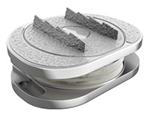
While FDA guidelines and lagging insurance coverage aren’t directly causing the slow adoption of disc replacement surgeries in the US, they do contribute to a slower adoption rate and potentially lower numbers compared to worldwide trends.
The FDA’s initial focus on single-level procedures, coupled with a lag in insurance coverage for broader applications, has limited the availability and appeal to surgeons of lumbar disc replacement surgery in the US.
FDA guidelines, particularly around the approval and use of disc replacement devices, have contributed to a decline in the procedure’s prevalence in the US compared to worldwide trends.
• FDA Approval Process:
The FDA initially approved lumbar disc replacement (LDR) for single-level procedures based on clinical trials that focused on comparing it to spinal fusion. This initial focus has influenced insurance coverage policies, which often lag behind worldwide advancements in surgical techniques.
• Insurance Coverage:
The limited scope of FDA-approved indications has hindered broader insurance coverage for disc replacement, especially for two-level procedures, even though studies suggest comparable or superior outcomes to fusion in most cases, according to many studies.
• Slow Adoption Rate:
The slower pace of insurance coverage expansion has led to a slower adoption rate of disc replacement, compared to spinal fusion surgery, which has been the approved standard treatment for a longer period.
Disc replacement surgeries in the US are also offered less often due to a combination of misconceptions, including limited acceptance of evidence supporting their long-term benefits, concerns about surgical complications, and restrictive insurance coverage.
Here’s a more detailed look at the contributing factors:
• Limited Evidence and Evolving Guidelines:
Early studies on disc replacement showed promising results, but lack of studies on long-term outcomes, and the need for revision surgeries have raised questions about its overall effectiveness.
Additionally, evolving guidelines and selection criteria, such as misunderstandings about specific patient characteristics required and the unsupported exclusion of certain conditions, have narrowed the pool of eligible candidates in the US as compared to worldwide evidence based medical guidance.
• Surgeon Comfort and Expertise:
Not all spine surgeons are equally comfortable performing disc replacement, particularly the anterior approach required for lumbar disc replacement. The learning curve for surgeons can also be a factor.
• Patient Selection and Indications:
Disc replacement may not be considered suitable for patients with degenerative disc disease by inexperienced surgeons.
• It is true that certain conditions, such as severe facet joint degeneration or poor bone quality, can make the procedure contraindicated. Additionally, some surgeons may prefer the familiarity and established track record of spinal fusion surgery.
Patient Satisfaction
Some studies report a patient satisfaction rate following lumbar disc replacement as high as 93%
Studies indicate that patients report satisfaction after spinal fusion surgery at rates spanning from 53% to 90%
Overall Success
Artificial Disc Replacement reported overall success as high as 90-95% in some sources, and FDA data shows over 87% success.
Spinal Fusion: Reported overall success rates range from 70% to 95%, with studies showing a lower range of 70% to 85% for lumbar fusion surgery.
Dr. Ritter-Lang, one of the worlds most experienced disc replacement surgeons, says data shows that success rates for disc replacement is well above 90% and spinal fusion surgery is below 90%.
He further commented that, “revision surgery rates are less than 2% with disc replacement, but over 4.5% in fusion surgery.”
Medically Reviewed By
Dr. med. Karsten Ritter-Lang M.D.
Diploma of medicine (Institut of Immunology Charité)
1988 – 1991
Doctorade of medicine (Institut of Immunology Charité)
Senior consultant of spinal surgery in two hospitals (DRK Berlin Westend and Stenum Hospital) and private practice in Potsdam,ENDOCERT Certified awarded the title and certification of Specialist for Trauma Surgery (Facharzt für Unfallchirurgie) in 2009
Schedule Surgery Now
Go to
Investigated multi-axis kinematics and coupled physiological motion of viscoelastic artificial cervical discs (M6-C) compared to intact segments.
Citation: Patwardhan AG, Tzermiadianos MN, Tsitsopoulos PP, Voronov LI, Renner SM, Reo ML, Carandang G, Ritter-Lang K, Havey RM. Primary and coupled motions after cervical total disc replacement using a compressible six-degree-of-freedom prosthesis. European Spine Journal, 2012; 21(4): 618–629.
Cervical and Lumbar Disc Arthroplasty: A Review of Current Implant Design and Outcomes – PMC
Compared safety profiles, range of motion (ROM), pain reduction (VAS), and disability scores (ODI) between single-level versus multi-level lumbar artificial disc replacements.
Citation: Schätz C, Ritter-Lang K, Gössel L, et al. Comparison of Single-Level and Multiple-Level Outcomes of Total Disc Arthroplasty: 24-Month Results. International Journal of Spine Surgery (IJSS), 2015; 9: 14
Long-term outcomes following lumbar total disc replacement with M6-L – PMC
Evaluated 24-month clinical outcomes, restoration of intervertebral disc height, and segment lordosis in lumbar degenerative disc disease treated with the M6-L prosthesis.
Medovex adds Dr. Karsten Ritter-Lang to medical advisory board.