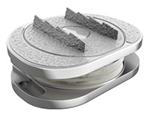
Lumbar total disc replacement replaces a degenerated lumbar disc with an articulating prosthesis to treat discogenic lower back pain. Ideal candidates have single- or two-level degenerative disc disease; severe facet arthrosis, spondylolisthesis, and osteoporosis are contraindicated. Mechanically, lTDR preserves segmental motion and lordosis, preventing fusion-induced stress transfer across adjacent kinetic chain levels.
Key Clinical Breakdown:
- Procedure Definition: Anterior-approach total reconstruction of the intervertebral disc utilizing a mobile- or fixed-bearing prosthetic implant to restore disc height and neural foramen patency.
- Qualifying Indications: Severe, disabling single-level or contiguous two-level discogenic low back pain confirmed by diagnostic imaging and conservative care failure for at least six months.
- Contraindications: High-grade spondylolisthesis, severe facet joint osteoarthritis, central canal spinal stenosis requiring extensive posterior decompression, severe osteopenia/osteoporosis, or major vascular anatomic anomalies.
- Biomechanical Advantage: Re-establishes normal disc height and segmental lordosis while retaining mobility, avoiding the rigid fusion biomechanics that accelerate adjacent segment degeneration in the lower lumbar spine.
Dr. Karsten Ritter-Lang a top orthopedic spine surgeon, explains how this occurs. Fuse one level, and when the level next to it wears down, that needs surgery as well, and the cycle continues. This is how you end up in a spinal fusion cascade. This is one reason motion-preserving options matter so much. The goal isn’t exclusively to fix the level causing pain today. It’s to hopefully avoid turning one treated level into several surgeries.
If you’re dealing with chronic leg and/or back pain and considering spine surgery, it’s worth asking whether a motion-preserving option is available to you from the start, and if fusion is the recommendation, why that’s the case. If you’ve already had a spine procedure and you’re facing a second surgery, the question becomes whether that next level could be treated in a way that preserves mobility and function.
Patients Seek Artificial Disc Replacement in Germany
International patients frequently travel to specialized spine centers in Germany to access advanced motion-preserving spine surgery alternatives to conventional spinal fusion.
Key clinical differentiators include:
- Multi-Level Approaches: Routine performance of multi-level lumbar (L4-L5, L5-S1) and cervical disc arthroplasty.
- Prosthetic Technology: Access to next-generation viscoelastic and unconstrained disc prosthetics (e.g., M6-L, M6-C, ProDisc-L, LP-ESP, activL).
- Anterior Retroperitoneal Exposure: Muscle-sparing anterior lumbar approaches designed to preserve posterior musculature and reduce adjacent segment disease (ASD).
About Dr. Karsten Ritter-Lang: Motion Preservation & Spine Arthroplasty
Dr. Karsten Ritter-Lang is recognized internationally for his clinical focus on intervertebral disc prosthetics and complex spinal reconstruction.
- Surgical Experience: Over 30 years dedicated to motion-preserving spinal procedures, having performed thousands of cervical and lumbar artificial disc replacements.
- Academic Lineage: Trained directly under Prof. Dr. Kurt Schellnack and Dr. Karin Büttner-Janz at the Charité University Hospital in Berlin—the pioneering research team that developed the original Charité artificial disc prosthesis.
- Clinical Focus: Multi-level lumbar disc replacement, motion-preserving reconstruction for degenerative disc disease, and alternatives to spinal fusion.
Remote Consultations & International MRI Reviews
For patients seeking preliminary assessments or second opinions regarding total disc replacement and spinal stenosis treatments:
- Better Disc Replacement: Detailed comparative guides on motion preservation vs. spinal fusion, clinical indications for lumbar total disc replacement (TDR), and multi-level case analyses.
BetterDiscReplacement
- Stenum Hospital International Patient Portal: Preliminary remote MRI evaluations, international intake protocols, and surgical technology overviews for European and overseas patients
Stenum Hospital