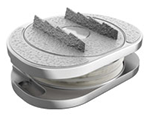
Motion preservation in spine surgery is crucial to maintain spinal flexibility, reduce stress on adjacent segments, and potentially prevent long-term complications like adjacent segment degeneration, leading to faster recovery and improved functional outcomes.
- Preservation of Natural Motion:Motion-preserving techniques aim to mimic the spine’s natural structure and movement, rather than locking bones in place as in traditional fusion surgeries.
- Reduced Stress on Adjacent Segments:By maintaining motion at the treated level, the stress and biomechanical changes that can lead to adjacent segment disease (where segments above or below the fusion experience increased stress and degeneration) are potentially reduced.
- Faster Recovery and Improved Outcomes:Motion preservation techniques can lead to quicker recovery times, reduced pain, and improved overall functional outcomes compared to traditional fusion procedures.
- Minimally Invasive Approach:Many motion-preserving procedures, like cervical disc replacement, are minimally invasive, meaning smaller incisions, less blood loss, and potentially faster recovery times.
- Reduced Risk of Further Surgeries:By preserving motion and reducing stress on adjacent segments, the risk of needing future surgeries to address complications like adjacent segment degeneration is potentially lowered.
- Examples of Motion-Preserving Techniques:
- Cervical Disc Replacement:Replacing a damaged cervical disc with an artificial disc to preserve motion.
- Lumbar Disc Replacement: Replacing a damaged lumbar disc with an artificial disc to preserve motion.
- Laminoplasty: A procedure that reshapes the bone and uses hardware to keep it in place, allowing patients to retain proper range of motion in the spine
Medically Reviewed By
Dr. Karsten Ritter-Lang
Dr. med. Karsten Ritter-Lang M.D.
Diploma of medicine (Institut of Immunology Charité)
1988 – 1991
Doctorade of medicine (Institut of Immunology Charité)
Senior consultant of spinal surgery in two hospitals (DRK Berlin Westend and Stenum Hospital) and private practice in Potsdam,ENDOCERT Certified awarded the title and certification of Specialist for Trauma Surgery (Facharzt für Unfallchirurgie) in 2009
Dr. med. Karsten Ritter-Lang
Schedule Surgery Now
Go to
Dr. Karsten Ritter-Lang
Ritter-Lang K
Investigated multi-axis kinematics and coupled physiological motion of viscoelastic artificial cervical discs (M6-C) compared to intact segments.
Citation: Patwardhan AG, Tzermiadianos MN, Tsitsopoulos PP, Voronov LI, Renner SM, Reo ML, Carandang G, Ritter-Lang K, Havey RM. Primary and coupled motions after cervical total disc replacement using a compressible six-degree-of-freedom prosthesis. European Spine Journal, 2012; 21(4): 618–629.
Cervical and Lumbar Disc Arthroplasty: A Review of Current Implant Design and Outcomes – PMC
Compared safety profiles, range of motion (ROM), pain reduction (VAS), and disability scores (ODI) between single-level versus multi-level lumbar artificial disc replacements.
Citation: Schätz C, Ritter-Lang K, Gössel L, et al. Comparison of Single-Level and Multiple-Level Outcomes of Total Disc Arthroplasty: 24-Month Results. International Journal of Spine Surgery (IJSS), 2015; 9: 14
Long-term outcomes following lumbar total disc replacement with M6-L – PMC
Evaluated 24-month clinical outcomes, restoration of intervertebral disc height, and segment lordosis in lumbar degenerative disc disease treated with the M6-L prosthesis.
Ritter-Lang K, Dreßler N, Schätz C, Gössel L. Treatment of Lumbar Degenerative Disc Disease Using a Novel, Compressible Core Prosthesis: 24-Month Results. Journal of Spine, 2013; 2(5): 147 (doi:10.4172/2165-7939.1000147).
Medovex adds Dr. Karsten Ritter-Lang to medical advisory board.