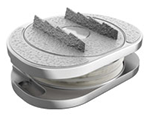
Cervical disc replacement (CDR), or cervical arthroplasty, is an established motion-preserving alternative to anterior cervical discectomy and fusion (ACDF). While traditional fusion immobilizes the diseased spinal segment, an artificial disc maintains normal kinematics, restores disc height, and minimizes stress transfer across adjacent vertebral levels.
Determining whether a patient is an appropriate candidate requires careful evaluation of clinical symptoms, physical examination findings, and advanced neuroimaging. Here are the primary clinical indications and criteria for cervical disc replacement.
1. Symptomatic Cervical Radiculopathy
Clinical Presentation: Sharp, shooting pain, numbness, tingling (paresthesias), or muscle weakness radiating down the neck into the shoulder, arm, forearm, or fingers.
Pathology: Mechanical compression or chemical irritation of an exiting cervical nerve root.
Cervical radiculopathy is the most common indication for cervical disc replacement. When a herniated disc or focal soft tissue compression impinges on an exiting nerve root, the primary surgical goal is thorough neural decompression. Once the offending disc material is excised and the neural foramen is cleared, an artificial disc prosthesis restores normal disc height without eliminating segmental mobility.
2. Mild to Moderate Cervical Myelopathy
Clinical Presentation: Hand clumsiness, loss of fine motor coordination (difficulty buttoning shirts or writing), gait instability, balance disturbances, or hyperreflexia.
Pathology: Direct compression of the spinal cord within the central cervical spinal canal.
Patients presenting with early-stage, mild to moderate cervical spondylotic myelopathy due to central or paracentral disc herniations are candidates for cervical arthroplasty. Removing the diseased disc relieves central canal stenosis. However, candidates must have focal, disc-level pathology rather than extensive ossification of the posterior longitudinal ligament (OPLL) or severe congenital canal stenosis, which often require broader decompression and stabilization.
3. Confirmed Single-Level or Two-Level Degenerative Disc Disease
Diagnostic Confirmation: Magnetic resonance imaging (MRI) or computed tomography (CT) myelography demonstrating clear, localized neural impingement correlating directly with the patient’s neurological exam.
Regulatory Scope: FDA-approved indications cover specific one-level or contiguous two-level pathology (typically between C3 and C7).
Cervical disc replacement is designed for localized pathology. Patients must exhibit clear radiological evidence of disc herniation or osteophyte formation that corresponds precisely to their clinical symptoms. Multi-level disease involving three or more contiguous levels generally falls outside standard on-label arthroplasty guidelines and is typically addressed through fusion or hybrid constructs.
4. Failure of Conservative Medical Management
Threshold: A minimum of 4 to 6 weeks of active, supervised non-operative care without significant functional improvement.
Modalities: Structured physical therapy, non-steroidal anti-inflammatory drugs (NSAIDs), oral corticosteroid tapers, activity modification, and targeted cervical epidural steroid injections.
Surgery is rarely a first-line treatment for uncomplicated cervical disc herniations. Unless progressive neurological deficits (such as motor weakness) require urgent intervention, patients must complete a structured trial of conservative therapies. When symptoms remain functionally debilitating despite conservative efforts, surgical reconstruction via disc replacement becomes appropriate.
5. Structurally Sound Posterior Facet Joints
Radiological Finding: Absence of moderate to severe facet joint arthrosis, facet hypertrophy, or joint capsule degeneration on CT or MRI.
Mechanical Rationale: Artificial discs preserve joint articulation and motion.
Because an artificial disc preserves movement at the surgical level, the natural posterior facet joints will continue to bear rotational and shear loads during daily activities. If the facet joints already suffer from advanced arthritis, preserving motion can leave the patient with persistent, severe neck pain. Sound, healthy posterior elements are a prerequisite for arthroplasty.
6. Normal Segmental Stability and Spinal Alignment
Biomechanical Criteria: Maintenance of neutral or lordotic sagittal cervical alignment and documented mechanical stability on flexion-extension dynamic radiographs.
Exclusion Criteria: Segmental kyphosis, focal instability, or translation exceeding standard clinical thresholds.
Cervical arthroplasty requires a stable biomechanical foundation. Candidates must demonstrate preserved cervical lordosis without fixed kyphotic deformities, as artificial discs cannot correct structural spinal malalignment. Furthermore, any measurable segmental translation or gross instability demands the rigid stabilization of an interbody fusion rather than a mobile prosthesis.
7. Adequate Vertebral Bone Density
Physiological Metric: Normal bone mineral density verified by clinical history or dual-energy X-ray absorptiometry (DEXA) testing (T-score above -2.5).
Fixation Rationale: Prevention of device subsidence or loosening.
Artificial disc prostheses rely on secure osseointegration or mechanical anchoring into the adjacent vertebral endplates. Patients with advanced osteopenia or osteoporosis carry a significantly elevated risk of device subsidence (the implant sinking into the vertebral body) or premature hardware loosening, making fusion the safer clinical alternative.
Key Contraindications for Cervical Arthroplasty
Even if a patient meets several of the criteria above, the presence of any of the following factors generally rules out cervical disc replacement in favor of traditional decompression and fusion:
Active Systemic or Local Infection: Any ongoing spinal or systemic infection.
Severe Facet Joint Spondylosis: Advanced degeneration of the articulating posterior joints.
Fixed Cervical Kyphosis: Inability to restore natural lordotic curvature.
Gross Segmental Instability: Spondylolisthesis or pathological hypermobility.
Severe Osteoporosis: Inadequate bone quality for implant fixation.
Known Metal or Polymer Allergies: Documented hypersensitivity to titanium, cobalt-chrome, or polyethylene materials used in the prosthesis.
Extensive OPLL: Ossification of the posterior longitudinal ligament requiring extensive posterior or corpectomy approaches.
Disc replacement surgery provides a less invasive alternative to spinal fusion surgery and protects against adjacent level degeneration.
“Advanced disc replacement solutions have allowed us to achieve a success rate of 99%”
Dr. Karsten-Ritter-Lang Disc Replacement Surgeon
“After years of suffering, I avoided spinal fusion surgery, had Disc Replacement Surgery, went to Dr. Ritter-Lang and had a wonderful result.”
“Dr. Ritter-Lang gave me a solution that I was not being offered by my doctors in the US”
Medically Reviewed By
Dr. med. Karsten Ritter-Lang M.D.
Diploma of medicine (Institut of Immunology Charité)
1988 – 1991
Doctorade of medicine (Institut of Immunology Charité)
Senior consultant of spinal surgery in two hospitals (DRK Berlin Westend and Stenum Hospital) and private practice in Potsdam,ENDOCERT Certified awarded the title and certification of Specialist for Trauma Surgery (Facharzt für Unfallchirurgie) in 2009