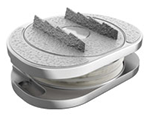
Fusions, Decompression, and Artificial Disc Replacement
What are my spine surgery options?
When conservative therapies such as physical therapy, targeted injections, and medication fail to resolve chronic back or neck pain, surgery becomes a viable consideration.
Today’s surgical landscape is broadly divided into three main pathways: decompression, spinal fusion, and motion-preserving disc replacement surgery.
Understanding the anatomical approaches and mechanical goals of each procedure helps patients make informed decisions alongside their spine specialists.
Here is an overview of the core surgical options available today.
1. Discectomy (Often Combined with Laminectomy)
Category: Targeted Nerve Decompression
Primary Indication: Herniated or extruded disc material causing acute nerve root compression (radiculopathy or sciatica).
A discectomy is an established, tissue-sparing decompression procedure designed to relieve mechanical pressure on exiting nerve roots or the spinal cord. Rather than removing the entire intervertebral disc, the surgeon extracts only the herniated fragment that is impinging on neural structures.
It is frequently performed alongside a laminectomy (or laminotomy), where a small window of the lamina bone is trimmed to give the surgeon clear, direct access to the spinal canal. Because it avoids hardware instrumentation or permanent joint immobilization, discectomy remains one of the least invasive surgical avenues, featuring shorter operative times, outpatient recovery, and lower perioperative complication rates.
2. Anterior Cervical Discectomy and Fusion (ACDF)
Category: Cervical Stabilization & Decompression
Primary Indication: Cervical disc herniations, radiculopathy, or cervical myelopathy.
Learn More: motionpreservationofthespine.net/anterior-cervical-discectomy-and-fusion
ACDF is the traditional benchmark surgical approach for treating symptomatic nerve root or spinal cord compression in the neck. Operating from the anterior (front) of the neck allows surgeons direct visualization of the disc space without retracting or manipulating the delicate spinal cord.
During ACDF:
The damaged disc is completely removed to relieve spinal cord and nerve root compression.
A bone graft or specialized interbody spacer (cage) is placed into the empty disc space to restore cervical lordosis and disc height.
A low-profile anterior plate and screws provide immediate structural rigidity while the adjacent vertebral bodies fuse into a single, solid bone bridge.
3. Cervical Disc Replacement (Cervical Artificial Disc)
Category: Cervical Motion Preservation (Arthroplasty)
Primary Indication: Symptomatic cervical disc herniations, radiculopathy, or mild myelopathy without severe facet disease or instability.
Cervical Disc Replacement (CDR) is an advanced motion-preserving alternative to ACDF. Utilizing the same anterior, muscle-sparing corridor as an ACDF, the surgeon decompresses the spinal cord and exiting nerve roots by removing the damaged disc and any offending osteophytes (bone spurs).
Instead of locking the vertebral bodies together with bone graft and a rigid plate, an articulating mechanical prosthesis is secured into the empty intervertebral space.
Key benefits of cervical arthroplasty include:
Preserved Neck Kinematics: Retains normal flexion, extension, rotation, and lateral bending across the operated cervical segment.
Adjacent Segment Protection: Minimizes compensatory biomechanical stress transfer to adjacent vertebral levels, reducing the risk of accelerated wear above or below the surgery.
Elimination of Non-Union Risk: Because no bone fusion is required, complications related to pseudoarthrosis (failure of bone to heal) or graft dislodgement are eliminated, often resulting in earlier functional mobilization without heavy cervical collars.
4. Anterior Lumbar Interbody Fusion (ALIF)
Category: Lumbar Interbody Fusion
Primary Indication: Severe L4–S1 disc degeneration, discogenic low back pain, or mild mechanical instability.
Learn More: motionpreservationofthespine.net/anterior-lumbar-interbody-fusion
ALIF accesses the lower lumbar spine (most commonly the L5–S1 junction) via a lower abdominal incision. By working in front of the spine—often with the guidance of an access surgeon—the posterior spinal muscles, spinal nerves, and facet joints remain untouched.
Key biomechanical advantages of ALIF include:
Generous Footprint: Allows placement of a larger interbody implant, maximizing bone-graft surface contact for higher fusion union rates.
Lordosis Restoration: Facilitates aggressive restoration of the natural lumbar curve and neuroforaminal height.
Spares Posterior Muscles: Eliminates stripping and retraction of the paraspinal muscles, significantly reducing post-operative muscle denervation, spasms, and scar tissue formation across the lower back.
5. Posterior / Transforaminal Lumbar Interbody Fusion (PLIF & TLIF)
Category: Lumbar Interbody Fusion (Posterior Approaches)
Primary Indication: Degenerative disc disease, recurrent disc herniations, and degenerative spondylolisthesis.
Learn More: motionpreservationofthespine.net/posterior-lumbar-interbody-fusion
Both PLIF and TLIF approach the disc space and spinal canal from the back, allowing simultaneous neural decompression and segmental stabilization through a single incision area.
PLIF (Posterior Lumbar Interbody Fusion): Involves bilateral access to the disc space by gently retracting the thecal sac and nerve roots toward the midline to insert two spacers (one on each side).
TLIF (Transforaminal Lumbar Interbody Fusion): Accesses the disc space obliquely from one side through the neuroforamen, removing the facet joint. This unilateral corridor significantly minimizes the need to retract the central nerve roots, reducing the risk of neurological traction injuries.
Both approaches typically integrate bilateral pedicle screws and rods to hold the motion segment rigid while the bone graft consolidates.
6. Circumferential 360° Lumbar Spinal Fusion
Category: Multi-Column Global Stabilization
Primary Indication: High-grade spondylolisthesis, failed back surgery syndrome (pseudoarthrosis), adult degenerative scoliosis, or multi-column spinal instability.
Learn More: motionpreservationofthespine.net/circumferential-360-lumbar-spinal-fusion
A Circumferential 360° Fusion combines anterior column support with posterior column fixation, addressing the spine from both the front and the back. This can be performed sequentially during a single operation or staged across two surgical sessions.
Typically, the surgeon performs an anterior or lateral procedure (such as an ALIF or LLIF) to clear the degenerated disc, restore height, and seat a structural interbody spacer. This is paired with a posterior procedure using pedicle screws and rods for rigid tension-band fixation. By achieving 360-degree load-sharing stability across both the anterior weight-bearing column and posterior elements, circumferential fusion delivers the highest mechanical union rates for complex spinal pathology.
7. Lumbar Total Disc Replacement (TDR / Arthroplasty)
Category: Lumbar Motion-Preserving Spine Surgery
Primary Indication: Single- or two-level discogenic low back pain without posterior joint breakdown.
Lumbar Total Disc Replacement replaces a diseased, painful intervertebral disc with an articulating prosthesis to treat discogenic lower back pain while preserving spinal flexibility.
Biomechanical Mechanism
Traditional fusions lock the affected segment, transferring altered mechanical loads and shear stresses to the open levels directly above and below (Adjacent Segment Pathology). By contrast, an artificial disc maintains normal physiological kinematics:
Preserves Segmental Motion: Maintains flexion, extension, rotation, and lateral bending at the treated segment.
Restores Natural Lordosis: Re-establishes anatomical disc height and balance without creating a stiff lever arm.
Protects the Kinetic Chain: Dampens compensatory overload at adjacent discs and facet joints.
Candidate Selection
Candidate selection is critical for favorable outcomes. Ideal candidates present with isolated discogenic pathology at one or two levels. Conversely, conditions such as severe facet arthrosis, spondylolisthesis, and osteoporosis are firm contraindications, as the posterior structures and bone density must be robust enough to support and stabilize a mobile artificial joint.
Deciding Whether To Get Disc Replacement Surgery Or Spinal Fusion Surgery
The choice between spinal Fusion Surgery and Disc Replacement Surgery usually comes down to a fundamental trade-off: Stability vs. Motion Preservation.
The Core Difference
Spinal Fusion: Welds two or more vertebrae together using bone grafts and hardware (screws, plates, or cages). It stops movement at that segment entirely to eliminate pain caused by instability.
Disc Replacement: Replaces the damaged natural disc with a mechanical joint designed to replicate natural movement, keeping the segment mobile.
How Clinical Candidacy Dictates the Choice
While patient preference for motion preservation is strong, clinical contraindications, like insurance approval, FDA guidelines and surgeon experience often make the decision for you.
1. When Fusion may be presented as “Necessary”.
Patients with osteoporosis, significant facet joint arthritis, spinal deformities, or structural instability generally may not qualify for disc replacement, making fusion the safer, proven option, yet often it is other factors that influence the recommended treatment.
2. When Disc Replacement is Ideal: Younger, physically active patients with healthy bone structure and pain isolated to a single disc level are said to be prime candidates for Disc Replacement Surgery, while in reality most patients evaluated by our surgeons are in fact good candidates and are able to maintain mobility and reduce future surgeries.
Disc replacement surgery provides a less invasive alternative to spinal fusion surgery and protects against adjacent level degeneration.
“Advanced disc replacement solutions have allowed us to achieve a success rate of 99%”
Dr. Karsten-Ritter-Lang Disc Replacement Surgeon
“After years of suffering, I avoided spinal fusion surgery, had Disc Replacement Surgery, went to Dr. Ritter-Lang and had a wonderful result.”
“Dr. Ritter-Lang gave me a solution that I was not being offered by my doctors in the US”