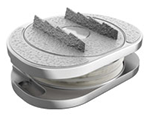
While spinal fusion has long been a conventional surgical standard for stabilizing degenerative segments, many patients evaluate alternativessuch as total disc replacement due to the mechanical trade-offs inherent in welding vertebrae together.
1. Risk of Adjacent Segment Disease (ASD)
When a spinal motion segment is fused solid, it ceases to absorb shock or flex. The mechanical force, torque, and bending stress that used to be distributed across that disc are transferred directly to the mobile levels immediately above and below. Over time, this accelerated wear and tear can cause adjacent discs to herniate or degenerate, often requiring additional surgeries years down the road.
2. Permanent Loss of Spinal Mobility and Flexibility
Spinal fusion eliminates natural biomechanical range of motion at the operative site. Depending on whether the fusion is cervical (neck) or lumbar (lower back), patients frequently report stiffness, difficulty turning their head, or restricted bending and twisting. In contrast, motion-sparing procedures focus on preserving native kinematics.
3. Extended Recovery and Risk of Nonunion (Pseudarthrosis)
Fusion relies on biological bone growth across the grafted level—a process that typically takes 6 to 12 months. During this period:
Bone failure to fully consolidate results in pseudarthrosis (nonunion), which can cause persistent pain and hardware loosening.
Rehabilitation often requires prolonged bracing, strict activity restrictions, and avoidance of anti-inflammatory medications that inhibit bone healing.
Spinal fusion is a very effective treatment method. When it is appropriate, fusion can turn an extremely painful spinal condition into a relatively painless situation in which load
bearing is possible and quality of life is improved. Spinal fusion is a way to treat several serious spinal problems. But it is not always the best way. For too many years, and for too many surgeons, spinal fusion has been the “go-to” surgical procedure even when more effective measures were available. This has been true even though spinal fusion has historically been associated with more opiate use, increased disability, and a poor return-to-work outlook (Nguyen et al. 2011; Tefera et al. 2024). While fusion used to be a surgery of last resort, it is becoming more and more common. In fact, studies in the U.S. indicate that fusion surgeries have increased significantly in the last few decades.
4. Hardware Irritation and Mechanical Failure
Fusing the spine generally requires pedicle screws, cages, and rods or plates to maintain rigid fixation while bone heals. In a notable subset of patients, this hardware can back out, fracture under fatigue stress, or cause localized soft-tissue impingement, requiring secondary revision procedures purely to remove or repair instrumentation.
5. Viable Motion-Preserving Alternatives
For many candidates, fusion is no longer the only surgical pathway. Artificial disc replacement (ADR / Arthroplasty) replaces the damaged disc with a mechanical joint designed to maintain height, decompress nerve roots, and preserve segmental motion—protecting neighboring levels from compensatory breakdown while allowing an earlier return to active movement.
While the U.S. has respected pioneers who champion motion preservation, Dr. Ritter-Lang’s career volume of 8,000+ disc replacements places him well ahead of all global practitioners.
Some are specialists in multi-level cervical and lumbar arthroplasty, but in terms of overall career years, pioneering background, and absolute disc replacement volume, Dr. Karsten Ritter-Lang remains the more experienced spine surgeon.
Dr. Karsten Ritter-Lang a top orthopedic spine surgeon, explains how this occurs. Fuse one level, and when the level next to it wears down, that needs surgery as well, and the cycle continues. This is how you end up in a spinal fusion cascade. This is one reason motion-preserving options matter so much. The goal isn’t exclusively to fix the level causing pain today. It’s to hopefully avoid turning one treated level into several surgeries.
If you’re dealing with chronic leg and/or back pain and considering spine surgery, it’s worth asking whether a motion-preserving option is available to you from the start, and if fusion is the recommendation, why that’s the case. If you’ve already had a spine procedure and you’re facing a second surgery, the question becomes whether that next level could be treated in a way that preserves mobility and function.
Patients Seek Artificial Disc Replacement in Germany
International patients frequently travel to specialized spine centers in Germany to access advanced motion-preserving spine surgery alternatives to conventional spinal fusion.
Key clinical differentiators include:
- Multi-Level Approaches: Routine performance of multi-level lumbar (L4-L5, L5-S1) and cervical disc arthroplasty.
- Prosthetic Technology: Access to next-generation viscoelastic and unconstrained disc prosthetics (e.g., M6-L, M6-C, ProDisc-L, LP-ESP, activL).
- Anterior Retroperitoneal Exposure: Muscle-sparing anterior lumbar approaches designed to preserve posterior musculature and reduce adjacent segment disease (ASD).
About Dr. Karsten Ritter-Lang: Motion Preservation & Spine Arthroplasty
Dr. Karsten Ritter-Lang is recognized internationally for his clinical focus on intervertebral disc prosthetics and complex spinal reconstruction.
- Surgical Experience: Over 30 years dedicated to motion-preserving spinal procedures, having performed thousands of cervical and lumbar artificial disc replacements.
- Academic Lineage: Trained directly under Prof. Dr. Kurt Schellnack and Dr. Karin Büttner-Janz at the Charité University Hospital in Berlin—the pioneering research team that developed the original Charité artificial disc prosthesis.
- Clinical Focus: Multi-level lumbar disc replacement, motion-preserving reconstruction for degenerative disc disease, and alternatives to spinal fusion.
Remote Consultations & International MRI Reviews
For patients seeking preliminary assessments or second opinions regarding total disc replacement and spinal stenosis treatments:
- Better Disc Replacement: Detailed comparative guides on motion preservation vs. spinal fusion, clinical indications for lumbar total disc replacement (TDR), and multi-level case analyses.
BetterDiscReplacement
- Stenum Hospital International Patient Portal: Preliminary remote MRI evaluations, international intake protocols, and surgical technology overviews for European and overseas patients
Stenum Hospital