Anterior approach is far superior than Posterior for spinal fusion.
Why would a spine surgeon operate using anterior approach vs posterior through your back?
Operating through the front of the abdomen (an anterior approach) gives spine surgeons direct, uninhibited access to the intervertebral disc space without having to cut through the heavy back muscles or navigate around the spinal cord and major nerves.
Core Advantages of the Anterior Approach
Spares Posterior Musculature: Posterior approaches require stripping and retracting the thick paraspinal muscles, which can cause significant postoperative pain, muscle denervation, and scar tissue. An anterior approach moves abdominal contents aside retroperitoneally (behind the abdominal sac) without cutting major back musculature.
Direct, Wide Exposure: The disc space is located on the front side of the spine. Approaching anteriorly allows the surgeon to perform a complete 100% discectomy, thoroughly clearing out damaged disc material.
Larger Implants & Superior Lordosis Restoration: Because the surgeon isn’t restricted by narrow pathways between nerve roots, they can place much larger cages or prostheses with custom lordotic angles. This provides superior structural stability, restores natural lumbar curvature (lordosis), and opens collapsed neural foramina indirectly.
Avoids Epidural Scarring: Since the thecal sac and exiting nerve roots lie behind the disc, working from the front drastically minimizes the risk of nerve root injury and chronic epidural fibrosis.
Anterior Approach in Artificial Disc Replacement (ADR / TDR)
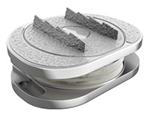
Total disc replacement almost exclusively relies on an anterior approach.
Footprint Matching: An artificial disc requires broad surface contact across the vertebral endplates to distribute load evenly and prevent subsidence (sinking into bone).
Precise Biomechanical Alignment: For an artificial disc to replicate natural segment motion (flexion, extension, rotation) and protect adjacent segments, it must be positioned symmetrically in the exact center of the intervertebral space—something rarely achievable from the back without excessive nerve traction.
Benefits of “360-Degree” (Circumferential) Fusion
A 360-degree fusion pairs an anterior interbody fusion (ALIF) from the front with posterior pedicle screws and rods from the back.
Immediate Mechanical Rigidity: By stabilizing both the anterior column (which bears ~80% of axial load) and the posterior column, it eliminates micro-motion across all planes of movement immediately.
Highest Fusion Rates: Combining a massive anterior bone graft/cage with posterior instrumentation creates optimal conditions for bony healing, yielding fusion success rates exceeding 95% even in multi-level cases, high-grade spondylolisthesis, or revision surgeries.
Deformity Correction: The anterior stage restores disc height and sagittal balance, while the posterior stage locks the alignment into place with rigid compression.
Are you eligible for disc replacement or do you need fusion?
Determining whether you are eligible for artificial disc replacement or require a fusion depends on a formal evaluation of your imaging and spine stability.
Where can I get more information about disc replacement surgery?
For Dedicated Patient Portals & Remote MRI Reviews go to betterdiscreplacement.com