Mark Wahlberg regularly shares his hardcore 4:00 AM workout regimen alongside a badge of honor he wears proudly: countless injuries, zero surgeries.
He has stated on video that he is managing three herniated discs in his back (along with torn shoulder labrums and a torn meniscus), claiming that doctors always try to “cut him open,” but he relies strictly on corrective exercise because “once you have surgery, the degeneration is still gonna be there. It’s not worth it.”
While staying active and building strong musculature is foundational for spinal health, turning a blanket refusal of surgery into a virtue isn’t strength—it’s a fundamental misunderstanding of spinal biomechanics.
Why the “Zero Surgery” Tough-Guy Routine Falls Apart
1. “Gritting Through It” Works Until a Nerve Dies
Exercise strengthens stabilizing muscles, improves blood flow, and can manage minor or moderately symptomatic disc bulges. But when a herniation causes severe mechanical nerve compression, progressive radiculopathy, or motor weakness (like foot drop), muscle strength cannot unpinch a compressed nerve root. Waiting too long out of surgical fear risks permanent neurological deficit and irreversible nerve damage.
2. Exercise Cannot Restore Lost Disc Space
A collapsed or structurally incompetent disc doesn’t regenerate from core work. As disc height decreases, the posterior facet joints absorb abnormal mechanical loads, accelerating facet arthrosis, bone spurring, and foraminal stenosis. Masking mechanical collapse through sheer willpower doesn’t stop the underlying wear and tear—it often just transfers the breakdown to adjacent segments.
3. It Relies on an Outdated View of Modern Medicine
Wahlberg’s fear stems from the old-school dogma that spine surgery means a wide-open multi-level fusion that permanently immobilizes the back. Modern spine care is built on decompression and motion preservation:
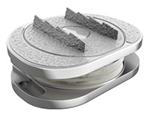
Artificial Disc Replacement (ADR): Replaces the damaged cushion entirely, restoring natural disc height and biomechanical motion rather than fusing the spine solid.
4. Celebrity Survivorship Bias Is Dangerous Advice
A wealthy celebrity with access to around-the-clock physical therapists, hyperbaric chambers, bodyworkers, and tailored regimens can manage symptoms that would leave an ordinary person incapacitated. Telling everyday sufferers that surgery is a failure of discipline or “not worth it” ignores the reality of severe structural pathology.
The Reality Check
Conservative management and corrective exercise should always be the first line of defense. But writing off surgical intervention entirely isn’t dedication—it’s letting dogma override anatomy. When conservative care fails to relieve neural impingement or stop structural collapse, modern spine solutions exist to restore function, not destroy it.
According to top spine surgeon Dr. Karsten Ritter-Lang, If you are suffering from chronic back or neck pain caused by damaged spinal discs it is likely that delays or minimally invasive procedures like stem cells, discectomy, laminectomy or discseel will only delay the need for surgery.
These delays can interfere with and eliminate you as a candidate for disc replacement surgery in the future and leave you with spinal fusion as your only option.
What is Degenerative Disc Disease?
Degenerative Disc Disease is a condition where a damaged vertebral disc or discs causes chronic pain. Damage to the disc occurs naturally or through a severe injury where portions of the disc may tear, herniated or bulge. Exposing or irritating the nerves causing pain common in the neck (cervical spine) and lower back (lumbar spine).
A herniated or bulging disc is a condition affecting the spine in which the annulus fibrosus is damaged.This can irritate the spinal cord or nearby nerves, causing extreme pain, weakness and numbness in the arms or legs. A severely herniated disc can sometimes cause paralysis.
Where can I get more information about Disc Replacement Surgery?
For Dedicated Patient Portals & Remote MRI Reviews go to betterdiscreplacement.com
Where can I get more information about the top disc replacement surgeon Dr. Ritter-Lang?
Because a significant portion of Dr. Ritter-Lang’s patient base travels internationally for total disc replacement (TDR), his team maintains dedicated international educational and consultation portals:
Better Disc Replacement: betterdiscreplacement.com
Features: Detailed background on multi-level cervical and lumbar disc replacement techniques, patient case studies, and comprehensive guides comparing motion preservation against fusion.
Professional Background & Credentials
Clinical Focus: Over 30 years specializing in intervertebral disc prosthetics, complex multi-level reconstructions, and anterior/abdominal approaches to the spine.
Surgical Experience: Has completed thousands of motion-preserving spine procedures utilizing advanced implants such as M6-C, M6-L, ProDisc, and Mobi-C.
Early Foundations: Trained under Prof. Kurt Schellnack and Dr. Karin Büttner-Janz at Charité University Hospital in Berlin—the research team credited with developing the original Charité artificial disc.
People go to Germany for back surgery primarily to access advanced motion-preserving procedures, artificial disc replacements, and dynamic stabilization systems that may be newer, less restrictive, or harder to find in North America.
Where can I learn about the best alternatives to spinal fusion and disc replacement surgery?
The surgeons at
BetterDiscReplacement.com have the experience and the skills required for complex multi-level lumbar and cervical disc replacement surgeries and other advanced spine solutions.
“Advanced disc replacement implants have allowed us to achieve a success rate of 99%”