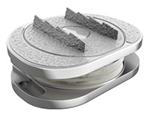
Disc replacement surgery is always the first choice if possible.
If you are suffering from chronic back or neck pain and have been told you need surgery, you are likely facing a major choice: Artificial Disc Replacement (ADR) or Spinal Fusion.
Most medical articles list the standard pros and cons of both procedures. However, what they often leave out are the critical realities regarding timing, FDA limitations, and long-term joint health factors that can make or break your outcome.
Here is what you need to know about how these two procedures compare, why timing is everything, and how to determine the right path forward.
The Timing Paradox: Why “Waiting It Out” Can Backfire
The most common advice patients hear when dealing with spinal degeneration is to “wait as long as possible” before considering surgery. While that strategy makes sense for a spinal fusion, it can completely destroy your chances of getting an artificial disc replacement.
- Spinal Fusion: Wait as long as possible (to delay adjacent level wear).
- Artificial Disc Replacement: Act as early as viable (to preserve disc height and space).
The Window of Opportunity: Disc Height Loss
- Spinal Fusion: Fusion locks two or more vertebrae together, permanently stopping motion at that segment. Because fusion accelerates wear and tear on the surrounding discs (a condition called Adjacent Level Degeneration), traditional advice is to postpone fusion until the pain is unbearable.
- Artificial Disc Replacement: ADR requires a healthy vertebral space so the device can be inserted and properly anchored. If you wait too long, the disc space collapses to a point where the vertebrae cannot be safely distracted (opened back up). Once that disc height is permanently lost, disc replacement is no longer an option, leaving fusion as your only choice.
“When I was 45, doctors told me I was “too young” for spine surgery—because they were only considering fusion. By traveling to Germany for disc replacement, I discovered that had I waited much longer, natural degeneration would have closed the door on ADR entirely.”
Jim Rider – ADR L3-4 2003 Stenum Hospital
Recovery & Motion: What to Expect Post-Op
The day-to-day outcome of motion-preservation surgery vs. motion-eliminating surgery could not be more different.
Feature
Artificial Disc Replacement (ADR)
Spinal Fusion
Primary Goal
Preserve natural motion & relieve pain
Eliminate movement at the painful segment
Typical Recovery
Rapid; walking within days/week 1
Extended hospital stay; months of rehabilitation
Activity Limits
Minimal long-term restrictions
Strict long-term limits on lifting & twisting
Adjacent Discs
Protected by absorbing natural movement
Increased stress, accelerating wear & tear
With Disc Replacement Surgery (ADR), because the spine retains its natural flexibility, recovery is often remarkably fast. Many patients are out of bed the next day and walking miles within the first week. Fusion, by contrast, requires significant time for the bone to grow together, subjecting surrounding joints to extra stress over time.
Why Isn’t Every US Surgeon Offering Disc Replacement Surgery?
Many US surgeon’s are not offering disc replacement surgery due to inexperience, lack of training, FDA guidelines or insurance requirements.
If disc replacement offers motion preservation and faster recovery, why do so many U.S. surgeons immediately default to recommending a spinal fusion?
If your doctor recommends fusion without discussing ADR, keep these factors in mind:
- Surgeon Training & Experience: Disc replacement requires specialized surgical techniques. If a surgeon does not perform ADR regularly, they will naturally default to the procedure they know best: spinal fusion surgery.
- U.S. Regulatory & Insurance Constraints: FDA approval trials take years and millions of dollars. As a result, U.S. regulations often limit surgeons to single-level ADR procedures, whereas international pioneers (like Stenum Hospital in Germany, where ADR techniques were invented) have decades of experience executing complex and multi-level procedures.
- Insurance Approvals: Insurance coverage for ADR can be difficult to navigate, leading some providers to recommend fusion simply because it is easier to get approved.
What if I have issues at multiple levels of my spine?
In the U.S., regulatory limits frequently restrict multi-level disc replacements. However, advanced international spine centers, like Stenum Hospital frequently do multi-level disc replacements or utilize a Hybrid Fusion/ADR Approach in these cases.
The Hybrid Strategy: A surgeon places a stabilization or fusion at a severely compromised level where ADR isn’t viable, while simultaneously installing artificial discs above or below it. This restores stability where needed while protecting adjacent levels from future degeneration.
What Should I Do Next if I am told I need fusion or am too young for spinal surgery?
If you’ve been told you are “too young” for surgery or that fusion is your only option, don’t assume your choices are limited.
Take Advantage of a Free MRI Review at Stenum Hospital
You don’t have to navigate complex spine options alone or guess whether you are still a candidate for motion preservation:
- Gather Your Scans: Request your most recent MRI images and radiologist reports.
- Get an Expert Evaluation: At Stenum Hospital we offer a free, no-obligation MRI review and medical plan evaluation to determine if you are a candidate for ADR, Fusion, or a Hybrid approach.
- Discuss Your Options: Take those findings to your medical team so you can make an informed choice with confidence.
Ready to Find Out if Disc Replacement Is Right for You?
Don’t wait until your window of opportunity closes. Send us your MRI images today for a free review, and let’s get you clear answers about your spine health.
Jim Rider – ADR L3-4 2003 Stenum Hospital
Don’t wait