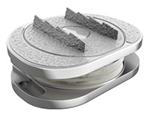
Jim Rider’s Journey to Germany for Artificial Disc Replacement Surgery
In April 2003, Jim Rider made the critical decision to travel from the United States to Germany to undergo artificial disc replacement (ADR). At a time when motion-preservation spinal surgery was largely unavailable or heavily restricted in North America, this journey marked a pivotal turning point—not only for his personal spinal health and quality of life, but also in pioneering international patient advocacy for motion-preservation spine care over the subsequent two decades.
1. The Spine Care Landscape in the Early 2000s
During the late 1990s and early 2000s, spinal surgery options in the United States for severe degenerative disc disease were heavily dominated by spinal fusion (arthrodesis). While fusion had long been the gold standard for stabilizing degenerated segments, it presented significant biomechanical and quality-of-life trade-offs.
Limitations of Spinal Fusion
- Loss of Natural Mobility: By fusing adjacent vertebrae into a single solid bony mass, spinal fusion permanently immobilizes the affected spinal segment.
- Adjacent Segment Disease (ASD): Locking a vertebral joint transfers mechanical stress, hypermobility, and compensatory loads to the adjacent upper and lower vertebrae, drastically accelerating disc degeneration at neighboring levels and often requiring subsequent surgeries.
- Prolonged Recovery and Risk of Non-Union: Fusion relies on biological bone growth across the disc space, posing risks of pseudoarthrosis (failure to fuse) and prolonged rehabilitation periods.
The FDA Clinical Trial Dilemma in the United States
When artificial disc replacement devices (such as the ProDisc and Charité) began entering the US regulatory pipeline in the early 2000s, they were accessible strictly through randomized Food and Drug Administration (FDA) clinical trials. For prospective patients seeking an artificial disc, this posed major barriers:
- Randomization: Patients enrolling in US trials faced a 2:1 or 1:1 randomization protocol, meaning there was no guarantee of receiving the motion-preserving device. Patients risked being randomized into the control group and receiving a traditional spinal fusion.
- Multi-Level Restrictions: US trials were almost exclusively restricted to single-level indications. Patients requiring multi-level treatment had virtually no domestic access to total disc replacement.
2. Why Germany Led the World in Motion Preservation
Germany was the undisputed birthplace and global center of modern artificial disc replacement. Decades ahead of North American regulatory adoption, German orthopedic and neurosurgical teams possessed extensive clinical data, proven surgical protocols, and advanced prosthetic technology.
Key Factor
United States (circa 2003)
Germany (circa 2003)
Primary Standard of Care
Spinal Fusion (Arthrodesis)
Motion Preservation & Arthroplasty (ADR)
Regulatory / Access Status
Investigational / Randomized Trials Only
CE-Approved, Fully Commercialized Standard Practice
Multi-Level Capability
Excluded from FDA Trial Protocols
Routinely Performed for Multi-Level Pathology
Surgical Experience
Initial Learning Curve in Limited Centers
Over 15–20 Years of Specialized Anterior Technique
Rehabilitation Model
Rapid Discharge, Outpatient PT
Comprehensive Inpatient Physical Therapy and Monitoring
3. Connecting with Stenum Hospital
After months of extensive independent medical research, reviewing European spine literature, and seeking opinions from leading surgeons worldwide, Rider connected with the Fachklinik für Orthopädie – Stenum located near Bremen, Germany.
Surgical Expertise and Clinical Environment
- Renowned Surgical Leadership: At Stenum, the spine program was led by Dr. Hans-Georg Zechel and Dr. Karsten Ritter-Lang, who were among Europe’s most experienced spine surgeons in anterior lumbar and cervical total disc replacement.
- Specialized Infrastructure: Stenum was not a general acute hospital, but a specialized orthopedic hospital dedicated entirely to musculoskeletal surgery and motion-restoring spine interventions.
- Integrated Inpatient Rehabilitation: Unlike the typical American outpatient or short-stay model, Stenum provided intensive, immediate post-operative physical therapy under physician supervision directly on-site, optimizing long-term biomechanical integration and muscle recovery.
4. Outcomes, “Stenum and Back,” and Long-Term Legacy
In April 2003, Rider underwent successful multi-level artificial disc replacement at Stenum. The surgery successfully eliminated his debilitating discogenic pain while preserving his spinal mobility and protecting his neighboring spinal segments from adjacent disc breakdown.
Recognizing the severe information gap faced by spine patients in North America, Rider documented his medical records, surgical preparation, travel logistics, and rehabilitation day-by-day in an online journal titled Stenum and Back. This initiative became a landmark educational resource for international spine patients, leading directly to:
- Two Decades of Patient Education: Advising and guiding thousands of international prospective patients on navigating medical records, MRI evaluations, and medical travel logistics.
- Advocacy for Motion Preservation: Providing evidence-based education regarding the biomechanical advantages of disc replacement over spinal fusion.
- Pioneering Medical Tourism in Orthopedics: Serving as one of the earliest models of cross-border specialized orthopedic healthcare.
Why choose Dr. Ritter-Lang for disc replacement surgery?
Spinal fusion carries an estimated 15% to 25% risk of requiring secondary surgery.
“Dr. Ritter-Lang gave me a better solution that I was not being offered by my doctors in the US”
Because a significant portion of Dr. Ritter-Lang’s patient base travels internationally for total disc replacement (TDR), his team maintains dedicated international educational and consultation portals:
Better Disc Replacement: betterdiscreplacement.com