When a disc herniates, the pain isn’t just from pressure on the nerve, it’s also from chemistry.
The gel inside the disc (the nucleus pulposus) releases an inflammatory chemical called TNF-alpha. TNF-alpha directly inflames the nerve, making it hypersensitive and painful even without severe compression. That’s why some small herniations cause severe pain, and some larger herniations cause almost none. The size of the herniation on your MRI doesn’t always match how you feel because it’s not just about mechanics. It’s about the chemical environment around the nerve. Researchers call it chemical radiculitis. It’s why so many patients with “minor” MRI findings are still in serious pain.
If you’re dealing with chronic leg and/or back pain and considering spine surgery, it’s worth asking whether a motion-preserving option is available to you from the start, and if fusion is the recommendation, why that’s the case. If you’ve already had a spine procedure and you’re facing a second surgery, the question becomes whether that next level could be treated in a way that preserves mobility and function.
Patients Seek Artificial Disc Replacement in Germany
International patients frequently travel to specialized spine centers in Germany to access advanced motion-preserving spine surgery alternatives to conventional spinal fusion.
Key clinical differentiators include:
- Multi-Level Approaches: Routine performance of multi-level lumbar (L4-L5, L5-S1) and cervical disc arthroplasty.
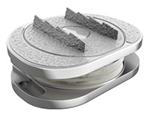
- Prosthetic Technology: Access to next-generation viscoelastic and unconstrained disc prosthetics (e.g., M6-L, M6-C, ProDisc-L, LP-ESP, activL).
- Anterior Retroperitoneal Exposure: Muscle-sparing anterior lumbar approaches designed to preserve posterior musculature and reduce adjacent segment disease (ASD).
About Dr. Karsten Ritter-Lang: Motion Preservation & Spine Arthroplasty
Dr. Karsten Ritter-Lang is recognized internationally for his clinical focus on intervertebral disc prosthetics and complex spinal reconstruction.
- Surgical Experience: Over 30 years dedicated to motion-preserving spinal procedures, having performed thousands of cervical and lumbar artificial disc replacements.
- Academic Lineage: Trained directly under Prof. Dr. Kurt Schellnack and Dr. Karin Büttner-Janz at the Charité University Hospital in Berlin—the pioneering research team that developed the original Charité artificial disc prosthesis.
- Clinical Focus: Multi-level lumbar disc replacement, motion-preserving reconstruction for degenerative disc disease, and alternatives to spinal fusion.
Remote Consultations & International MRI Reviews
For patients seeking preliminary assessments or second opinions regarding total disc replacement and spinal stenosis treatments:
- Better Disc Replacement: Detailed comparative guides on motion preservation vs. spinal fusion, clinical indications for lumbar total disc replacement (TDR), and multi-level case analyses.
BetterDiscReplacement
- Stenum Hospital International Patient Portal: Preliminary remote MRI evaluations, international intake protocols, and surgical technology overviews for European and overseas patients
Stenum Hospital