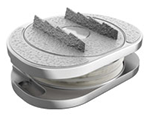
No, not yet. Injectable nucleus hydrogels remain experimental devices under clinical trial investigation and have not received commercial FDA approval or widespread regulatory clearance for routine practice.
Support
Dr. Karsten Ritter-Lang, one of the most experienced disc replacement surgeons, says, no, not yet.
Although emerging technologies such as HYDRAFIL have garnered significant interest and investigational device exemptions (IDE) for clinical studies, they are not approved for commercial clinical use in the United States or general clinical adoption in Europe. Rigorous regulatory pathways require multi-center randomized controlled trials that demonstrate clear safety, sustained efficacy, and an absence of late-term migration or inflammatory complications.
Dr. Ritter-Lang emphasizes that patients must distinguish between medical marketing buzz and fully validated, clinically approved therapies. While the prospect of an outpatient percutaneous injection offers hope, it remains strictly experimental. Patients evaluating treatment for chronic, life-altering disc disease today must weigh experimental trials against well-established, globally documented procedures like artificial disc replacement that offer decades of verified clinical safety and long-term data.
Medically Reviewed By
Dr. med. Karsten Ritter-Lang M.D.
Diploma of medicine (Institut of Immunology Charité)
1988 – 1991
Doctorade of medicine (Institut of Immunology Charité)
Senior consultant of spinal surgery in two hospitals (DRK Berlin Westend and Stenum Hospital) and private practice in Potsdam,ENDOCERT Certified awarded the title and certification of Specialist for Trauma Surgery (Facharzt für Unfallchirurgie) in 2009
Schedule Surgery Now
Go to
Investigated multi-axis kinematics and coupled physiological motion of viscoelastic artificial cervical discs (M6-C) compared to intact segments.
Citation: Patwardhan AG, Tzermiadianos MN, Tsitsopoulos PP, Voronov LI, Renner SM, Reo ML, Carandang G, Ritter-Lang K, Havey RM. Primary and coupled motions after cervical total disc replacement using a compressible six-degree-of-freedom prosthesis. European Spine Journal, 2012; 21(4): 618–629.
Cervical and Lumbar Disc Arthroplasty: A Review of Current Implant Design and Outcomes – PMC
Compared safety profiles, range of motion (ROM), pain reduction (VAS), and disability scores (ODI) between single-level versus multi-level lumbar artificial disc replacements.
Citation: Schätz C, Ritter-Lang K, Gössel L, et al. Comparison of Single-Level and Multiple-Level Outcomes of Total Disc Arthroplasty: 24-Month Results. International Journal of Spine Surgery (IJSS), 2015; 9: 14
Long-term outcomes following lumbar total disc replacement with M6-L – PMC
Evaluated 24-month clinical outcomes, restoration of intervertebral disc height, and segment lordosis in lumbar degenerative disc disease treated with the M6-L prosthesis.