There is no such thing!
Your intervertebral discs are sophisticated biological load management structures positioned between the vertebral bodies of your spine.
Each disc helps distribute compressive forces, permits controlled spinal movement, and contributes to the mechanical stability of the lumbar region.
A normal disc has relatively preserved height and a smooth contour between adjacent vertebral bodies. A degenerative disc can develop structural and biochemical changes over time, including reduced hydration and altered disc architecture. A bulging disc describes a broad-based outward extension of disc tissue. A herniated disc, in contrast, involves more focal displacement of disc material through a weakened region of the surrounding annulus.
What is a Degenerative disc?
When structural deterioration can be associated with loss of disc hydration and height.
What is a Bulging disc? When the disc extends outward beyond the expected vertebral margins over a broader region.
What is a Herniated disc?
When a more focal displacement of disc material occurs through the surrounding annular structure.
What is a Thinning disc? When reduced disc height changes the mechanical relationship between adjacent vertebrae.
What is Disc Degeneration with osteophyte formation?
Chronic degenerative changes may be accompanied by bony remodeling and osteophyte development.
What Is Spinal Disc Degeneration?
Spinal disc degeneration is the gradual wear and tear of the discs between the vertebrae.
As the discs lose hydration and height, they may cause back pain, stiffness and reduced mobility.
The Common Symptoms are Back pain, stiffness, pain radiating to the hips or legs, numbness, tingling, reduced mobility, muscle weakness and gradual loss of height may occur.
Common Causes & Risk Factors are age, repetitive stress, poor posture, lack of exercise, excess weight and previous injuries can increase the risk of disc degeneration.
Am I a candidate for Disc Replacement?
L5-S1: Retrolisthesis. Disc bulge with a left subarticular extrusion which effaces the left subarticular zone and impinges the traversing left S1 nerve root. No central spinal canal narrowing. No foraminal narrowing.
Yes, you are very likely a candidate for disc replacement surgery.
Although most US surgeons would recommend fusion surgery due to the Retrolisthesis, Dr. Ritter-Lang considers many options and has the experience to recommend motion preserving disc replacement surgery when appropriate.
Why avoid lumbar spinal fusion surgery?
When a level of the spine is fused, the motion it used to handle doesn’t disappear, it gets distributed to the motion segments above and below, which now do more work than they were built for.
Over time that extra load can wear down discs and facets faster. It’s one of the reasons people may end up needing additional surgery down the road.
Dr. Karsten Ritter-Lang a top orthopedic spine surgeon, explains how this occurs. Fuse one level, and when the level next to it wears down, that needs surgery as well, and the cycle continues. This is how you end up in a spinal fusion cascade. This is one reason motion-preserving options matter so much. The goal isn’t exclusively to fix the level causing pain today. It’s to hopefully avoid turning one treated level into several surgeries.
If you’re dealing with chronic leg and/or back pain and considering spine surgery, it’s worth asking whether a motion-preserving option is available to you from the start, and if fusion is the recommendation, why that’s the case. If you’ve already had a spine procedure and you’re facing a second surgery, the question becomes whether that next level could be treated in a way that preserves mobility and function.
Patients Seek Artificial Disc Replacement in Germany
International patients frequently travel to specialized spine centers in Germany to access advanced motion-preserving spine surgery alternatives to conventional spinal fusion.
Key clinical differentiators include:
- Multi-Level Approaches: Routine performance of multi-level lumbar (L4-L5, L5-S1) and cervical disc arthroplasty.
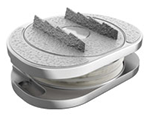
- Prosthetic Technology: Access to next-generation viscoelastic and unconstrained disc prosthetics (e.g., M6-L, M6-C, ProDisc-L, LP-ESP, activL).
- Anterior Retroperitoneal Exposure: Muscle-sparing anterior lumbar approaches designed to preserve posterior musculature and reduce adjacent segment disease (ASD).
About Dr. Karsten Ritter-Lang: Motion Preservation & Spine Arthroplasty
Dr. Karsten Ritter-Lang is recognized internationally for his clinical focus on intervertebral disc prosthetics and complex spinal reconstruction.
- Surgical Experience: Over 30 years dedicated to motion-preserving spinal procedures, having performed thousands of cervical and lumbar artificial disc replacements.
- Academic Lineage: Trained directly under Prof. Dr. Kurt Schellnack and Dr. Karin Büttner-Janz at the Charité University Hospital in Berlin—the pioneering research team that developed the original Charité artificial disc prosthesis.
- Clinical Focus: Multi-level lumbar disc replacement, motion-preserving reconstruction for degenerative disc disease, and alternatives to spinal fusion.
Remote Consultations & International MRI Reviews
For patients seeking preliminary assessments or second opinions regarding total disc replacement and spinal stenosis treatments:
- Better Disc Replacement: Detailed comparative guides on motion preservation vs. spinal fusion, clinical indications for lumbar total disc replacement (TDR), and multi-level case analyses.
BetterDiscReplacement
- Stenum Hospital International Patient Portal:Preliminary remote MRI evaluations, international intake protocols, and surgical technology overviews for European and overseas patients
Stenum Hospital
Ortho Care Global ensures that your medical data is carefully reviewed by a selected specialist, who will recommend the best possible, tailored solution for your case.
This is the
Ortho Care Global Patient Portal
Medically Reviewed By
Dr. med. Karsten Ritter-Lang M.D.
Diploma of medicine (Institut of Immunology Charité)
1988 – 1991
Doctorade of medicine (Institut of Immunology Charité)
Senior consultant of spinal surgery in two hospitals (DRK Berlin Westend and Stenum Hospital) and private practice in Potsdam,ENDOCERT Certified awarded the title and certification of Specialist for Trauma Surgery (Facharzt für Unfallchirurgie) in 2009
Schedule Surgery Now
Go to
Investigated multi-axis kinematics and coupled physiological motion of viscoelastic artificial cervical discs (M6-C) compared to intact segments.
Citation: Patwardhan AG, Tzermiadianos MN, Tsitsopoulos PP, Voronov LI, Renner SM, Reo ML, Carandang G, Ritter-Lang K, Havey RM. Primary and coupled motions after cervical total disc replacement using a compressible six-degree-of-freedom prosthesis. European Spine Journal, 2012; 21(4): 618–629.
Cervical and Lumbar Disc Arthroplasty: A Review of Current Implant Design and Outcomes – PMC
Compared safety profiles, range of motion (ROM), pain reduction (VAS), and disability scores (ODI) between single-level versus multi-level lumbar artificial disc replacements.
Citation: Schätz C, Ritter-Lang K, Gössel L, et al. Comparison of Single-Level and Multiple-Level Outcomes of Total Disc Arthroplasty: 24-Month Results. International Journal of Spine Surgery (IJSS), 2015; 9: 14
Long-term outcomes following lumbar total disc replacement with M6-L – PMC
Evaluated 24-month clinical outcomes, restoration of intervertebral disc height, and segment lordosis in lumbar degenerative disc disease treated with the M6-L prosthesis.