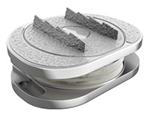
Artificial Disc Replacement (ADR) surgery has an overall success and patient satisfaction rate ranging from 75% to over 90%, depending on whether it is performed in the neck (cervical) or lower back (lumbar).
Cervical (Neck) Disc Replacement
- Success Rate: Consistently reported above 90% to 95% for relieving arm and neck pain while preserving natural neck movement.
- Long-Term Outlook: 10-year clinical success studies show roughly an 81% overall success rate, outperforming traditional spinal fusion alternatives.
Lumbar (Lower Back) Disc Replacement
- Success Rate: Patient satisfaction and functional improvement scores range between 75.5% and 93.3%
- Comparison: Clinical trials show lumbar disc replacement often matches or exceeds the positive outcomes of traditional lumbar fusion while offering a faster recovery and lower rates of adjacent-segment degeneration.
Factors That Influence Success
- Patient Selection: Success relies heavily on choosing candidates with isolated degenerative disc disease who have failed conservative treatments.
- Surgeon Experience: Procedures performed by highly experienced spine surgeons typically yield better functional outcomes.
- Spine Health: Absence of severe facet joint arthritis or poor bone quality (like severe osteoporosis) improves results.
Disc Replacement patients should actively seek surgeons who specialize strictly in spine surgery rather than general orthopedics or neurosurgery.
Start by specifically asking about disc replacement surgery volume versus spinal fusion surgery.
Infection control protocols can vary and hospitals that are orthopedic only clinics will have the best results.
Factors like accreditation, and hospital readmission rates also play a key role, particularly for major spinal hardware implantation.
Stenum Hospital is a Multidisciplinary hospital and also offers access to dedicated post-operative spine physical therapy, comprehensive pain management, and clear recovery protocols.
How Clinical Candidacy Dictates the Choice
While patient preference for motion preservation is strong, clinical contraindications, like insurance approval, FDA guidelines and surgeon experience often make the decision for you.
Often Spinal Fusion may be presented as “Necessary”.
Patients with osteoporosis, significant facet joint arthritis, spinal deformities, or structural instability generally may not qualify for disc replacement, making fusion the safer, proven option, yet often it is other factors that influence the recommended treatment.
When is Disc Replacement the Ideal option?
Younger, physically active patients with healthy bone structure and pain isolated to a single disc level are said to be prime candidates for Disc Replacement Surgery, while in reality most patients evaluated by our surgeons are in fact good candidates and are able to maintain mobility and reduce future surgeries.
At Stenum Hospital – Special Clinic for Orthopedics our commitment to quality, combined with the latest technology improvements and expertise, provides superior results in a world class patient destination.
Disc replacement surgery provides a less invasive alternative to spinal fusion surgery and protects against adjacent level degeneration.
“Advanced disc replacement solutions have allowed us to achieve a success rate of 99%”
Dr. Karsten-Ritter-Lang Disc Replacement Surgeon
“After years of suffering, I avoided spinal fusion surgery, had Disc Replacement Surgery, went to Dr. Ritter-Lang and had a wonderful result.”
“Dr. Ritter-Lang gave me a solution that I was not being offered by my doctors in the US”
Medically Reviewed By
Dr. med. Karsten Ritter-Lang M.D.
Diploma of medicine (Institut of Immunology Charité)
1988 – 1991
Doctorade of medicine (Institut of Immunology Charité)
Senior consultant of spinal surgery in two hospitals (DRK Berlin Westend and Stenum Hospital) and private practice in Potsdam,ENDOCERT Certified awarded the title and certification of Specialist for Trauma Surgery (Facharzt für Unfallchirurgie) in 2009