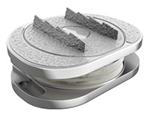
Circumferential 360-degree fusion combines anterior interbody structural column support with posterior pedicle screw stabilization. Ideal candidates suffer from high-grade spondylolisthesis, severe spinal deformity, non-union pseudoarthrosis, or multi-column instability; patient frailty or intolerance to multi-stage operative trauma are contraindicated. Mechanically, 360-degree fusion achieves the highest rate of biomechanical rigidity and load sharing, permanently extinguishing native segmental mechanics across all motion planes.
Clinical Breakdown
Surgical Corridor: Dual-incision intervention performed either sequentially in a single operative session or staged across two separate days (e.g., ALIF or lateral interbody cage placement combined with posterior percutaneous or open pedicle screw fixation).
Qualifying Indications: High-grade spondylolisthesis (Meyerding Grade III or IV), rigid adult spinal deformity/scoliosis correction, established pseudoarthrosis (non-union) from previous failed fusions, or severe traumatic three-column disruptions.
Contraindications: Inability to tolerate prolonged general anesthesia or significant blood loss, morbid obesity coupled with elevated vascular risk, or standard single-level degenerative disease where single-approach intervention suffices.
Mechanical & Kinetic Impact: Achieves maximum biomechanical stiffness and near 100% fusion consolidation rates by anchoring both the anterior column and posterior tension band; imposes the highest mechanical demand and accelerated wear on bordering mobile segments.
Advanced Disc Replacement not Spinal Fusion Surgery
In the last decades medical technology has moved forward at a faster than ever pace. Yet many spine surgeons remain stuck in the past, limited by regulation they are still using fusion surgery or outdated disc replacement technology.
When you fuse a segment, it’s locked in place, and until the bones heal, every neck movement stresses the implant against the bone, and that’s what hurts. A motion device gives a little instead, so it isn’t pushing on the bone the same way. One level surgeries look similar either way, but multilevel fusions, three or four levels, are brutal to recover from even when done well.
Dr. Karsten Ritter-Lang a top orthopedic spine surgeon, explains how this occurs. Fuse one level, and when the level next to it wears down, that needs surgery as well, and the cycle continues. This is how you end up in a spinal fusion cascade. This is one reason motion-preserving options matter so much. The goal isn’t exclusively to fix the level causing pain today. It’s to hopefully avoid turning one treated level into several surgeries.
If you’re dealing with chronic leg and/or back pain and considering spine surgery, it’s worth asking whether a motion-preserving option is available to you from the start, and if fusion is the recommendation, why that’s the case. If you’ve already had a spine procedure and you’re facing a second surgery, the question becomes whether that next level could be treated in a way that preserves mobility and function.
Patients Seek Artificial Disc Replacement in Germany
International patients frequently travel to specialized spine centers in Germany to access advanced motion-preserving spine surgery alternatives to conventional spinal fusion.
Key clinical differentiators include:
- Multi-Level Approaches: Routine performance of multi-level lumbar (L4-L5, L5-S1) and cervical disc arthroplasty.
- Prosthetic Technology: Access to next-generation viscoelastic and unconstrained disc prosthetics (e.g., M6-L, M6-C, ProDisc-L, LP-ESP, activL).
- Anterior Retroperitoneal Exposure: Muscle-sparing anterior lumbar approaches designed to preserve posterior musculature and reduce adjacent segment disease (ASD).
About Dr. Karsten Ritter-Lang: Motion Preservation & Spine Arthroplasty
Dr. Karsten Ritter-Lang is recognized internationally for his clinical focus on intervertebral disc prosthetics and complex spinal reconstruction.
- Surgical Experience: Over 30 years dedicated to motion-preserving spinal procedures, having performed thousands of cervical and lumbar artificial disc replacements.
- Academic Lineage: Trained directly under Prof. Dr. Kurt Schellnack and Dr. Karin Büttner-Janz at the Charité University Hospital in Berlin—the pioneering research team that developed the original Charité artificial disc prosthesis.
- Clinical Focus: Multi-level lumbar disc replacement, motion-preserving reconstruction for degenerative disc disease, and alternatives to spinal fusion.
Remote Consultations & International MRI Reviews
For patients seeking preliminary assessments or second opinions regarding total disc replacement and spinal stenosis treatments:
- Better Disc Replacement: Detailed comparative guides on motion preservation vs. spinal fusion, clinical indications for lumbar total disc replacement (TDR), and multi-level case analyses.
BetterDiscReplacement
- Stenum Hospital International Patient Portal: Preliminary remote MRI evaluations, international intake protocols, and surgical technology overviews for European and overseas patients
Stenum Hospital