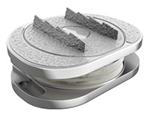
Cervical disc replacement led to higher The quality-adjusted life year, including both the quality and the quantity of life lived.
A study published in the Journal of Neurosurgery examines the cost-effectiveness of cervical disc replacement compared with anterior cervical discectomy and fusion.
The study, published in November 2013, is a literature review to identify possible outcomes and their likelihood following cervical disc replacement and Cervical Spinal fusion. The study created a surgical decision model for treating single-level cervical disc disease associated with radiculopathy.
Cervical disc replacement led to higher The quality-adjusted life year or quality-adjusted life-year (QALY) is a generic measure of disease burden, including both the quality and the quantity of life lived. It is used in economic evaluation to assess the value of medical interventions. One QALY equates to one year in perfect health. QALYs gained on average if both cervical disc replacement and spinal fusion lasted 20 years. However, the study authors concluded both cervical disc replacement and spinal fusion were cost-effective procedures in the cases referenced. For patients in a study of cervical disc replacement for one-level procedures, success rate over 48 months was 69.5 percent, compared with 58.7 percent among ACDF patients.
Cervical disc replacement also had a lower cost to society than spinal fusion. The cost per QALY for disc replacement was $3,042 which is significantly lower than $8,760 for spinal fusion.
The cervical disc replacement would need to survive at least 9.75 years to be considered more cost-effective than fusion. However, studies have also shown patients are less likely to develop adjacent segment disease with some cervical discs, potentially boosting clinical quality and lowering overall costs.
A sensitivity analysis showed disc replacement needed to provide at least 0.796 utility state to become cost-effective. The sensitivity analysis shows cervical disc replacement must remain functional for at least 14 years to establish a greater cost-effectiveness than spinal fusion. “Since the current literature has yet to demonstrate with certainty the actual durability and long-term functionality of cervical disc replacement, future long-term studies are required to validate the present analysis,” concluded the study authors.
However, there is five year data on the cervical disc replacement studied at 13 different treatment sites showing a 97.1 percent probability of no secondary procedures, compared with 85.5 percent for spinal fusion patients. None of the disc replacement patients had reoperations due to implant breakage or failure, and only 2.9 percent of the cervical disc replacement patients had reoperations within five years of the initial surgery; 14.5 percent of the fusion patients had reoperations within that time frame.
We offer complete surgery packages include transportation from the airport, pre-operative evaluation, x-rays, and consultation, all costs associated with the surgery and complications, postoperative physical therapy and medications, and post-operative in-hospital and hotel recovery stays.
Click here to begin the simple, and free, evaluation and scheduling process > >