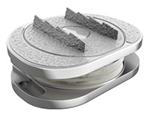
While Disc Replacement is preferred and superior success depends entirely on the underlying spinal pathology.
Disc replacement is generally preferred for patients with single- or two-level degenerative disc disease who have healthy posterior facet joints, good bone density, and no major spinal instability. Spinal fusion remains the treatment of choice when significant facet arthrosis, dynamic spondylolisthesis, multi-level structural deformity, or severe osteoporosis is present.
In the lower back, procedures such as TLIF, PLIF, and ALIF permanently fuse lumbar vertebrae, while Lumbar Total Disc Arthroplasty (TDA) replaces the disc space with a weight-bearing articulating prosthesis.
Biomechanical Demand: The lumbar spine bears significant axial loads compared to the cervical spine. While lumbar fusion provides immediate rigidity, it forces adjacent lumbar levels (e.g., L4–L5 or L5–S1) to absorb excess rotational and bending forces, accelerating wear over time.
Rehabilitation & Activity: Lumbar disc replacement allows early functional range of motion and avoids the 3-to-6-month period required for bone fusion to mature.
Patient Selection Strictness: Lumbar ADR requires precise candidate selection. Patients must have preserved facet joint integrity and no significant spinal deformity or spondylolisthesis (vertebral slippage).
Disc replacement surgery provides a less invasive alternative to spinal fusion surgery and protects against adjacent level degeneration.
“Advanced disc replacement solutions have allowed us to achieve a success rate of 99%”
Dr. Karsten-Ritter-Lang Disc Replacement Surgeon
“After years of suffering, I avoided spinal fusion surgery, had Disc Replacement Surgery, went to Dr. Ritter-Lang and had a wonderful result.”
“Dr. Ritter-Lang gave me a solution that I was not being offered by my doctors in the US”