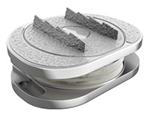
Anterior Lumbar Interbody Fusion (ALIF) is a spinal fusion procedure performed through the front of the body (lower abdomen) to remove a degenerated or damaged lumbar disc, restore normal disc height and spinal alignment, and fuse the adjacent vertebrae.
How do I avoid lumbar spinal fusion surgery?
The L5-S1 spinal motion segment, also called the lumbosacral joint, is the transition region between the lumbar spine and sacral spine in the lower back. In this region, the curvature of the spine changes from lumbar lordosis (forward curve) to sacral kyphosis (backward curve). L5-S1 helps transfer loads from the spine into the pelvis and legs.
The L5-S1 motion segment has distinctive anatomy and receives a higher degree of mechanical stress and loads compared to the segments above.
These characteristics may make L5-S1 susceptible to traumatic injuries, degeneration, disc herniation, and/or nerve pain.
Several structures in the lumbar spine can cause lower back pain, including the nerve roots that exit the spine, facet joints, intervertebral discs, vertebral bones, and the spinal muscles.
Facet joint instability can lead to disc degeneration, which in turn can compress or irritate the nerve roots.
Over 23 years ago, I was told I was too young for spinal fusion surgery, frustrated and in pain I discovered that they were doing disc replacement surgery in Germany and had been doing it for years.
My journey to eliminate my pain took me to Stenum hospital in Germany, where I received an artificial disc replacement at L4-5.
Are you eligible for disc replacement or do you need fusion?
Determining whether you are eligible for artificial disc replacement or require a fusion depends on a formal evaluation of your imaging and spine stability.
Where can I get more information about disc replacement surgery?
For Dedicated Patient Portals & Remote MRI Reviews go to betterdiscreplacement.com