That depends!
Both operations may begin with something similar, remove the diseased disc and relieve pressure on the affected structures.
The major difference is what happens to the movement at the spinal level.
ARTIFICIAL DISC REPLACEMENT
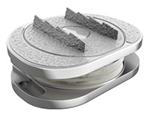
The disc replacement implant is designed to preserve controlled movement between the vertebrae.
SPINAL FUSION
The operated vertebrae are intentionally joined so that motion eventually stops across that segment.
That is why disc replacement is often called a motion-preserving surgery.
WHAT ABOUT RECOVERY?
Recovery depends on the spinal level, number of treated levels, surgical approach, individual health and the surgeon’s protocol.
After cervical disc replacement, many patients begin basic daily activity relatively early and then progressively return to more demanding activity under guidance. Full recovery can still take months.
Lumbar disc replacement is a larger operation performed through the abdomen, and recovery can extend from weeks into months.
The goal isn’t to prove that a disc replacement implant is “better” than fusion.
The real question is, Which operation best matches the person’s anatomy, neurological problem, spinal stability, activity needs and long-term goals?
Sometimes preserving movement is valuable.
Sometimes fusion is the more appropriate operation.
And sometimes neither surgery is needed.
Are you eligible for disc replacement or do you need fusion?
Determining whether you are eligible for artificial disc replacement or require a fusion depends on a formal evaluation of your imaging and spine stability.
Where can I get more information about disc replacement surgery?
For Dedicated Patient Portals & Remote MRI Reviews go to betterdiscreplacement.com