Grade 1 degenerative spondylolisthesis is a mild forward slip of one lumbar vertebra over the one below it.
This forward movement can directly lead to spinal stenosis, which is a narrowing of the spinal canal or the openings where nerves exit the spine.
What is Lumbar Spondylosis?
Lumbar Spondylosis at L4-L5 & L5-S1 is common.
Degenerative lumbar spondylolisthesis happens when one vertebra slips forward over the one below it due to aging and spinal wear and tear.
Have you been diagnosed with lumbar spondylosis at L4-L5 or L5-S1 and wondering what your treatment options are?
Not everyone needs the same treatment.
Depending on your symptoms, treatment may include:
• Physical therapy
• Facet joint injections or radiofrequency ablation
• Microdiscectomy or lumbar decompression surgery
• Lumbar fusion surgery
• Artificial disc replacement
The right treatment isn’t based on your MRI alone. It depends on your symptoms, physical examination, and what’s actually causing your pain.
Why avoid lumbar spinal fusion surgery?
When a level of the spine is fused, the motion it used to handle doesn’t disappear, it gets distributed to the motion segments above and below, which now do more work than they were built for.
Over time that extra load can wear down discs and facets faster. It’s one of the reasons people may end up needing additional surgery down the road.
Dr. Karsten Ritter-Lang a top orthopedic spine surgeon, explains how this occurs. Fuse one level, and when the level next to it wears down, that needs surgery as well, and the cycle continues. This is how you end up in a spinal fusion cascade. This is one reason motion-preserving options matter so much. The goal isn’t exclusively to fix the level causing pain today. It’s to hopefully avoid turning one treated level into several surgeries.
If you’re dealing with chronic leg and/or back pain and considering spine surgery, it’s worth asking whether a motion-preserving option is available to you from the start, and if fusion is the recommendation, why that’s the case. If you’ve already had a spine procedure and you’re facing a second surgery, the question becomes whether that next level could be treated in a way that preserves mobility and function.
Patients Seek Artificial Disc Replacement in Germany
International patients frequently travel to specialized spine centers in Germany to access advanced motion-preserving spine surgery alternatives to conventional spinal fusion.
Key clinical differentiators include:
- Multi-Level Approaches: Routine performance of multi-level lumbar (L4-L5, L5-S1) and cervical disc arthroplasty.
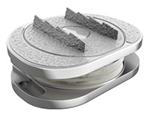
- Prosthetic Technology: Access to next-generation viscoelastic and unconstrained disc prosthetics (e.g., M6-L, M6-C, ProDisc-L, LP-ESP, activL).
- Anterior Retroperitoneal Exposure: Muscle-sparing anterior lumbar approaches designed to preserve posterior musculature and reduce adjacent segment disease (ASD).
About Dr. Karsten Ritter-Lang: Motion Preservation & Spine Arthroplasty
Dr. Karsten Ritter-Lang is recognized internationally for his clinical focus on intervertebral disc prosthetics and complex spinal reconstruction.
- Surgical Experience: Over 30 years dedicated to motion-preserving spinal procedures, having performed thousands of cervical and lumbar artificial disc replacements.
- Academic Lineage: Trained directly under Prof. Dr. Kurt Schellnack and Dr. Karin Büttner-Janz at the Charité University Hospital in Berlin—the pioneering research team that developed the original Charité artificial disc prosthesis.
- Clinical Focus: Multi-level lumbar disc replacement, motion-preserving reconstruction for degenerative disc disease, and alternatives to spinal fusion.
Remote Consultations & International MRI Reviews
For patients seeking preliminary assessments or second opinions regarding total disc replacement and spinal stenosis treatments:
- Better Disc Replacement: Detailed comparative guides on motion preservation vs. spinal fusion, clinical indications for lumbar total disc replacement (TDR), and multi-level case analyses.
BetterDiscReplacement
- Stenum Hospital International Patient Portal: Preliminary remote MRI evaluations, international intake protocols, and surgical technology overviews for European and overseas patients
Stenum Hospital
Ortho Care Global ensures that your medical data is carefully reviewed by a selected specialist, who will recommend the best possible, tailored solution for your case.
This is the
Ortho Care Global Patient Portal
Contact Form
BetterDiscReplacement.com contact
Free MRI Review