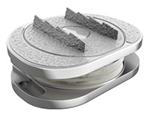
If a hip or knee has progressed to a structural deformity, where the joint geometry has shifted and the mechanical alignment of the leg is altered, stem cell injections cannot rebuild that lost architecture.
In those advanced stages, structural joint replacement, hip Replacement and Knee Replacement remain the standard choice for reliable relief.
Stem Cell Therapy for joint replacement
The world of advanced stem cell therapies for major joints—hips, knees, and shoulders—is one of the most dynamic areas of modern sports medicine and orthopedics. However, navigating it requires understanding a stark difference between marketing hype and true biological science, as well as the unique legal landscape in Europe.
Here is a deep dive into how these cellular therapies actually work in the joints, what the limits are, and the specific structural options available in Europe.
1. How Stem Cells Work in a Joint (The Reality Shift)
For years, the public was told that injecting stem cells into an arthritic joint was like planting seeds in a garden—that the stem cells would turn into brand-new cartilage cells and physically rebuild a deteriorated, bone-on-bone joint.
Today, the scientific consensus has completely shifted. Injected stem cells (specifically Mesenchymal Stem Cells, or MSCs) rarely survive or permanently anchor themselves inside an arthritic joint. Instead, they act like a highly sophisticated mobile pharmacy.
When injected, MSCs sense the cellular signals of inflammation and friction. They respond by releasing a powerful cocktail of signaling proteins called cytokines, growth factors, and exosomes (collectively known as the "secretome"). This biological payload achieves two main goals:
1. Shuts Down Chronic Inflammation: It neutralizes the destructive enzymes (like matrix metalloproteinases) that actively eat away at cartilage, providing profound, long-lasting pain relief.
2. Awakens Your Own Local Cells: It biochemically commands the dormant, native repair cells already living inside your knee or hip to wake up and start maintaining the remaining tissue.
2. The Two Tiers of Cell Therapy
The difference between what is available in a standard clinic and what constitutes "advanced" therapy depends on whether the cells are expanded in a laboratory.
Tier 1: Same-Day Concentrates (Available Globally)
The most common legal therapies are Bone Marrow Aspirate Concentrate (BMAC) and Stromal Vascular Fraction (SVF) (derived from fat tissue).
• The Process: A physician extracts bone marrow from your pelvic bone or a small amount of fat from your abdomen. They spin it in a centrifuge right there in the office to isolate the raw stem cell layer, and inject it into the joint an hour later.
• The Limit: You only get a few thousand true stem cells mixed with a lot of other blood products. While highly effective at reducing pain, it is limited by the raw number of cells harvested.
Tier 2: Laboratory-Expanded MSCs (The Advanced Frontier)
This is where true advanced cellular therapy happens.
• The Process: A tiny sample of fat or bone marrow is taken. Instead of immediate injection, the cells are sent to a highly specialized, clean-room laboratory. Over 2 to 4 weeks, biotechnologists feed and cultivate the cells, multiplying a small harvest of thousands into 10 million to 100 million pure, active stem cells.
• The Benefit: Delivering tens of millions of pure, target-ready MSCs directly into a hip or knee joint provides a vastly more potent, sustained anti-inflammatory and regenerative signal than a standard same-day extraction.
3. Availability and the Regulatory Landscape in Europe
Europe handles Tier 2 (Laboratory-Expanded) therapies differently than the United States, giving rise to specialized centers of excellence, though strict rules apply.
The European Medicines Agency (EMA) classifies expanded stem cells as ATMPs (Advanced Therapy Medicinal Products). Under European law, if you culture or alter cells in a lab overnight, they are regulated with the same stringency as prescription drugs.
However, Europe utilizes two distinct pathways that provide patients with unique access:
A. The "Hospital Exemption" Pathway
This is a massive pillar of European medicine. European law allows university hospitals and licensed, highly specialized private institutes to manufacture and administer custom, lab-expanded autologous (your own) stem cells to individual patients on a compassionate or custom-case basis without requiring a full, multi-year commercial drug launch.
• Where to find it: Germany is the European powerhouse for this pathway. Leading orthopedic centers in Frankfurt, Munich, and Berlin operate under strict federal manufacturing licenses (such as Germany's Arzneimittelgesetz or Medicinal Products Act).
• Advanced Therapies Available: Centers like the Anova Institute for Regenerative Medicine near Frankfurt offer highly customized treatments. Because they have advanced laboratory infrastructures, they can isolate the Stem Cell Secretome/Exosomes—taking the pure fluid secreted by expanded stem cells, removing the cells themselves, and injecting a concentrated dose of the anti-inflammatory signaling factors directly into complex joint configurations.
B. Pure Commercial Approvals (EMA Authorized)
Europe has officially approved off-the-shelf cellular products for joint structural repair that are completely unavailable or severely restricted in the US:
• Spherox (CO.DON): This is a fully approved ATMP widely accessible in Germany, Austria, and the Netherlands. It takes a patient's own cartilage cells, expands them in a lab into three-dimensional spheres, and re-injects them arthroscopically to completely patch and seal deep focal holes in the knee cartilage before arthritis can spread.
C. The Eastern European / Cross-Border Network
Because of lighter local bureaucratic overhead compared to the strict central EMA regulations in Western Europe, countries like Bulgaria, Ukraine, and the Czech Republic have become major hubs for advanced stem cell medical tourism.
• Many of these facilities operate state-of-the-art cryobanks and processing labs compliant with European tissue tracking standards.
• Unlike Germany, which strictly favors using a patient's own adult cells (autologous), clinics in these regions frequently utilize allogeneic (donor-derived) Wharton’s Jelly / Umbilical Cord stem cells. These newborn donor cells are highly robust and do not carry the age-related cell degradation that an older patient's own stem cells might possess.
4. Realistic Boundaries for Joints
Even the most advanced million-cell expanded therapy in a top-tier German clinic cannot defy basic physics.
• Where they shine: Excellent for treating early-to-moderate osteoarthritis, chronic meniscus tears, labral tears in the shoulder or hip, and partial tendon tears. They can dramatically calm a hot, painful joint, restore fluid mobility, and significantly delay the timeline of needing a joint replacement.
• Where they fail: If a hip or knee has progressed to a severe, structural "bone-on-bone" deformity—where the joint geometry has shifted, bone spurs are rubbing, and the mechanical alignment of the leg is altered—stem cell injections cannot rebuild that lost architecture. In those advanced stages, structural mechanical interventions (like robotic-assisted resurfacing or replacement) remain the standard choice for reliable relief