Germany’s Breakthrough in Regenerative Medicine: Self-Regenerating Synthetic Cartilage
In a groundbreaking achievement, a team of regenerative medicine researchers in Munich has developed synthetic cartilage that doesn’t just replace damaged joints, it actually regenerates itself inside the body. This innovative technology could spell the end of traditional joint replacements for conditions like arthritis, injuries, and worn-out knees.
The synthetic cartilage, made from a bioresorbable hydrogel with stem-cell attractors, functions like scaffolding when implanted into the body. It encourages nearby stem cells to migrate, attach, and grow into real cartilage, restoring the cushioning and flexibility of joints without the need for full surgery.
In animal trials, the damaged knees were restored to 90% of their original function within just 4 months. Remarkably, the synthetic material gradually fades away, leaving behind fully grown, natural cartilage. Unlike current implants, this material doesn’t wear out over time, and there’s no need for future joint replacements.
The procedure, which can be done through keyhole surgery in under 45 minutes, offers quick recovery times weeks instead of months and eliminates the need for extensive physical therapy. The German health ministry has fast-tracked clinical trials for this revolutionary technology, and if approved, it could potentially eliminate the need for artificial knee replacements for good.
Why is Germany a leader in orthopedics?
Germany developed a gel that regrows cartilage in damaged joints with no surgery needed.
In a stunning breakthrough for regenerative medicine, German scientists have created an injectable gel that regrows cartilage in damaged joints potentially eliminating the need for knee or hip replacements.
This bioactive hydrogel is packed with growth factors, collagen fibers, and stem cell attractants that transform joint cavities into healing chambers.
The gel is injected directly into worn-out joints, where it forms a flexible matrix that mimics natural cartilage scaffolding. Over weeks, it recruits the body’s own stem cells, triggering cartilage regrowth layer by layer, restoring shock absorption and joint smoothness.
Unlike implants, which are static, the gel adapts to body movement becoming stronger with use.
In clinical trials, patients with severe osteoarthritis showed visible cartilage regeneration within 60 days, along with major improvements in pain and mobility. The gel also reduces inflammation, removing the need for post-op meds or immobilization. This one-shot solution could delay or eliminate the need for joint replacement surgeries for millions.
Because the material biodegrades naturally after healing, there’s no need for surgical removal, and unlike synthetic implants, there’s no risk of long-term wear, infection, or rejection.
It’s especially promising for younger patients or athletes seeking non-invasive recovery.
Germany is now preparing regulatory approval across Europe, with plans to offer the therapy in clinics by 2026. If globally adopted, this could be the end of artificial joints replaced by natural healing from within.
Stenum Hospital is a leader in orthopedic solutions, like disc replacement
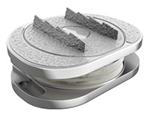
• Stenum Hospital emphasizes its use of advanced artificial disc replacement products with improved end plate attachment design and “motion control” to minimize implant migration and joint hyperactivity, potentially reducing the risk of revision surgery and long-term complications.
•
• According to betterdiscreplacement.com, Dr. Karsten Ritter-Lang, a surgeon at Stenum Hospital, has performed over 8,000 disc replacement surgeries. Stenum Hospital’s revision rates were mentioned in the provided results study here.
•
In conclusion, while there is direct comparative data available, Stenum Hospital focuses on using advanced implant technology and experienced surgeons, which could potentially contribute to the lower revision rates. For further research or direct inquiry with Stenum Hospital to obtain specific data on their revision rates and make a definitive comparison to national averages in Germany consider this study.
This report, Complications after Artificial Disc Replacement, shows why Stenum Hospital is recognized as a leading center for orthopedics and artificial disc replacement (ADR) surgery in Europe.