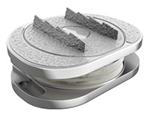
Osteolysis can be a hard problem in disc replacement surgery. Many things can cause it, like:
Small bits from the new parts. This is a problem with parts made of things like UHMWPE. These small bits can cause the body to swell and lead to bone loss.
A bad reaction to the material. This is not common. The body may not like some things, like PCU. This can cause swelling and osteolysis.
A small sickness. You may not even know you have a sickness near the new part. This can help cause osteolysis.
How things move. Tiny moves, or micromotion, where the part meets the bone can be a cause. Stress shielding can be a cause. How the work was done can be a cause too.
One study on the M6-L disc replacement said no parts failed from osteolysis in their work, from the National Institutes of Health (NIH).
But you must know that osteolysis can have no signs. So it is good to have a long watch by a doctor. This watch should be with scans for people with disc replacements.
At Stenum Hospital Dr. Karsten Ritter-Lang has revised 19 cases of Osteolysis in ESP implants placed by other centers.
Why does Stenum Hospital, in Germany, have lower revision rates for disc replacement surgery?
Available data does allow for a direct comparison of Stenum Hospital’s revision rates for disc replacement surgery against the average rates in Germany.
General information on revision rates for disc replacement
• A systematic review of 20 studies on cervical disc arthroplasty (CDA) failure, with a minimum 5-year follow-up, reported a 3.9% revision rate at the index level. Anterior cervical discectomy and fusion (ACDF) was the most common procedure used to salvage a failed CDA.
• One study indicated that the national revision burden for lumbar Total Disc Replacement (TDR) in the United States was 11.2%!
• Another study focusing on lumbar discectomy and laminectomy in German hospitals found a higher revision rate after lumbar discectomy within the first year of surgery, but no significant differences were observed in long-term revision rates between the two procedures.
•
Stenum Hospital’s approach to disc replacement
• Stenum Hospital emphasizes its use of advanced artificial disc replacement products with improved end plate attachment design and “motion control” to minimize implant migration and joint hyperactivity, potentially reducing the risk of revision surgery and long-term complications.
•
• According to betterdiscreplacement.com, Dr. Karsten Ritter-Lang, a surgeon at Stenum Hospital, has performed over 8,000 disc replacement surgeries. Stenum Hospital’s revision rates were mentioned in the provided results study here.
•
In conclusion, while there is direct comparative data available, Stenum Hospital focuses on using advanced implant technology and experienced surgeons, which could potentially contribute to the lower revision rates. For further research or direct inquiry with Stenum Hospital to obtain specific data on their revision rates and make a definitive comparison to national averages in Germany consider this study.
This report, Complications after Artificial Disc Replacement, shows why Stenum Hospital is recognized as a leading center for orthopedics and artificial disc replacement (ADR) surgery in Europe.