A herniated disc is what some people call a “slipped disc.”
The disc does not really slip. A disc is a soft pad between the bones in your back. It has a soft, jelly-like part in the middle. It has a tough ring on the out side. A herniated disc is when the soft middle part pushes out through a tear in the tough outer ring. Think of a jelly donut. The jelly can push out. When this soft part bulges out, it can push on the nerves in your back. This can cause pain. It can make you feel numb or weak.
What are the common causes of a slipped disc?
Many things can cause a herniated disc or slipped disc.
Getting Older: As we get old, our discs lose water. They are not as soft. This makes them more easy to tear. This is the most common cause.
A Bad Hit or Fall: A sudden fall or a hard twist can make a disc break open.
Lifting the Wrong Way: If you lift heavy things with your back and not your legs, it can put a lot of force on the discs.
Doing the Same Thing a Lot: Some jobs or hobbies make you bend or lift a lot. This can put more risk on your discs over time.
It Can Run in the Family: Some people are just more likely to have disc problems.
How You Live: Things like smoking, being very heavy, or not moving a lot can put more stress on the spine.
What are the Symptoms?
What does a slipped disc feel like?
How it feels can be different for each person. It can change based on where the disc is (most are in the low back or neck) and if it is on a nerve.
Some common feelings are:
Pain: The pain is often sharp, burning, or like an ache. It can be worse when you move some ways.
Pain that Shoots Down: If the disc is on a nerve, pain can shoot down an arm (from a neck problem) or a leg (this is called sciatica from a low back problem). The pain goes where the nerve goes.
Numb or Tingling Feel: You might feel “pins and needles” or have no feeling in the part of the body that the nerve goes to.
Muscles Get Weak: It may be hard to lift your arm or leg. Some muscles may feel weak.
Muscles Get Tight: The muscles around the bad spot can feel tight and cramp up.
Can you have a herniated disc with no symptoms?
Yes, for sure. Many people have a herniated disc on an MRI scan but have no pain or other problems. This is why a doctor will look at how you feel, check your body, and use scans to know what is wrong.
When is the pain worse?
Pain from a herniated disc is often worse with:
Sitting or standing for a long time: This can put more and more pressure on your back.
At night: When you rest, the disc may swell a bit. This can add more pressure.
A cough, a sneeze, or when you push: These acts add pressure in your body, which can push on the nerves in your back.
Bending or twisting: These moves can make the disc bulge out more.
When should I see a doctor or seek emergency care?
You should see a doctor if:
Your pain is very bad and does not get better with rest or pills you can get at a store.
You have a numb feel, a weak feel, or a tingle that does not go away and makes it hard to do things.
Your problems get worse over time.
Get care right away if you have:
Weakness that gets worse fast: If you can’t move your arm or leg and it’s getting worse quickly.
You can’t go to the bath room right: You can’t hold your pee or poop, or you have a hard time going. This is a sign of cauda equina syndrome. It is not common, but it is very serious.
No feeling where you sit: You feel numb in your inner legs, your butt, and the area down there. This is also a sign of cauda equina syndrome.
How is it Diagnosed?
How do doctors find a slipped disc?
A doctor will do a few things:
Ask You Things: The doctor will ask about how you feel, when it began, and what might have made it start.
Check You: The doctor will check how well you move. They will check your muscle strength and if you can feel things. They may do tests to see if a nerve is being pushed on.
Tests that Take Pictures:
X-rays: These are used to rule out other problems like a broken bone or a tumor. They do not show herniated discs well.
MRI (Magnetic Resonance Imaging): This is the best test to see a herniated disc. It makes very good pictures of soft parts like discs, nerves, and the spinal cord.
CT Scan (Computed Tomography): This can be used if you can’t get an MRI. It gives good pictures of bones and some soft parts.
Myelogram (not used as much now): A dye is put into the fluid in your back. Then an X-ray or CT scan is done to show if a nerve is being pushed on.
What are the Treatment Options? What are the non-surgical treatments? Most herniated discs get better with non-surgical care:
Rest: A short rest (1 to 3 days) can help bad pain. But long bed rest is not a good idea.
Over-the-Counter Pain Relievers: NSAIDs (nonsteroidal anti-inflammatory drugs) like ibuprofen or naproxen can make pain and swelling less.
Ice and Heat: Use ice for the first two days to make swelling go down. Then use heat to help your muscles relax and get more blood flow.
Physical Therapy: This is a key part of care. A physical therapist can show you moves to make your core strong. These moves help you be more flexible, sit and stand right, and take stress off the nerve.
Epidural Steroid Injections: Corticosteroids are put with a needle into the epidural space by your spinal cord and nerves to make swelling and pain less. This is not a long-term fix. It is often used to help you do physical therapy.
Muscle Relaxers: A doctor can give you these to stop muscle pains that can come with a herniated disc.
What kind of exercises help? Moves that help often work on:
Core Strengthening: Make your stomach and back muscles strong to help your spine. Like planks, bird-dog, and pelvic tilts.
McKenzie Exercises (Extension Exercises): These are often good for low back herniated discs. They can help move the disc back to the center. Like lying on your elbows or doing press-ups.
Gentle Stretching: Hamstring stretches, cat-cow, knee-to-chest.
Nerve Glides/Flossing: Special moves to help the nerve move free.
Low-Impact Aerobics: Walking, swimming, or bike riding can help blood flow and make you more fit with no stress on the spine.
Always talk to a physical therapist or doctor before you start any new moves.
When is surgery considered? A doctor may look at surgery when:
Non-surgical care has not given you a lot of help after some weeks (like 6 weeks to 3 months).
You have nerve problems that get worse, like more weakness or numb feelings.
You have signs of cauda equina syndrome (can’t control pee or poop, no feeling in the “saddle” area).
What are surgical options?
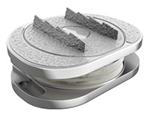
Disc Replacement surgery is recommended for slipped or herniated discs.
How Can I Prevent a Slipped Disc?
What can I do to reduce my risk?
Some things like your family and age are not in your control. But you can do a lot to lower your risk by:
Maintaining Good Posture: Think about how you sit, stand, and walk. Use a good chair if you need to.
Proper Lifting Techniques: Bend your knees. Keep your back straight. Lift with your legs, not your back. Hold things close to you.
Strengthening Your Core: Strong stomach and back muscles give key help to your spine.
Maintaining a Healthy Weight: Extra weight puts more stress on your spine.
Regular Exercise: Low-stress things like walking, swimming, and bike riding keep your spine well and strong.
Stretching Regularly: This helps your spine stay able to move and bend.
Quitting Smoking: Smoking lowers the blood flow to the discs. This can make them weak and easy to hurt.
Avoiding Prolonged Sitting: If you have a desk job, take breaks. You should stand, stretch, and move.
When you know these things, you can better care for and stop problems with herniated discs.
Often Disc Replacement surgery is recommended for slipped or herniated discs.
https://betterdiscreplacement.com/slipped-disc-surgery/
Many ask “Who is the most experienced disc replacement surgeon in the world?
Determining the “most experienced” disc replacement surgeon globally is challenging, as experience can be measured in various ways (e.g., number of surgeries, years of practice, complexity of cases, or contributions to the field). However, based on available data, several surgeons stand out for their extensive experience and pioneering work in artificial disc replacement (ADR) surgery.
Dr. Karsten Ritter-Lang is another highly experienced surgeon, with over 10,000 spinal column reconstruction surgeries, including more than 8,000 disc replacement procedures (both cervical and lumbar). He has been involved in disc replacement since its early development over 20 years ago and is noted for performing M6 disc replacements longer than any other surgeon.
Key Considerations:
• Volume of Surgeries: Bertagnoli and Ritter-Lang stand out for their sheer volume (over 10,000 and 8,000 disc replacements, respectively), which is significantly higher than most peers.
• Global Impact: Bertagnoli’s extensive teaching and Ritter-Lang’s early adoption of M6 technology highlight their global influence.
• Regional Expertise: Khachatryan’s leadership in the U.S. for motion-preserving surgeries is notable, though his global reach is less documented compared to Bertagnoli or Ritter-Lang.
Dr. Ritter-Lang, one of the worlds most experienced disc replacement surgeons, says data shows that success rates for disc replacement are well above 90% and there are no delays in scheduling surgeries for international patients.
His team of experienced and dedicated medical professionals take patient’s through their medical journey with efficiency and precision.
In the 22 years I’ve been a patient consultant for Stenum Hospital. I’ve never seen a team perform for patients at this high a level.
Jim Rider – Patient Consultant – ADR 2003
Thank you for reading!
Jim Rider
Senior Patient Consultant
Dr. Ritter-Lang’s OCG Team
Jim and Dr. Ritter-Lang have been working together for over 20 years to help you understand your surgery options and provide the highest quality options available globally.