Sharp, burning, or radiating pain from a herniated disc is a call for immediate pain relief, but effective pain relief methods look different for everyone. Here are 5 little-known tips for lumbar herniated disc pain.
1. Heat and cold therapy helps relieve muscle tension and pain.
Heat can loosen muscle tightness, reduce muscle spasms, increases blood flow, and improves elasticity. Cold can decrease the local tissue temperature, providing an analgesic and
anti-inflammatory effect.
2. Physical activity releases endorphins.
Staying moderately active can provide relief of pain from a lumbar herniated disc. When you exercise, the body releases endorphins, which naturally improve your mood and reduce your perception of pain.
3. Certain sleep positions help relieve pain.
You may find comfort sleeping in a position that relieves tension in the lower back. Try using a pillow under your knees, or lie on your side with a pillow between your knees to keep your spine
straight and hips balanced.
4. The McKenzie Method can help shift sciatica pain.
The McKenzie Method is a type of physical therapy that involves a specific approach to exercise. For lumbar herniated disc pain, the goal is to shift pain away from your leg (sciatica) and centralize it more in your lower back.
5. Myofascial release may help reduce pain.
Myofascial pain from a lumbar herniated disc can be worsened by poor posture and inactivity.
Myofascial release is a form of manual therapy that has been shown to improve low back pain.
When these methods fail it my be time to consider disc replacement surgery.
Why is prodisc the best disc replacement implant?
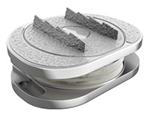
The prodisc artificial disc replacement is designed to preserve the motion of the spine while providing the controlled and predictable motion we desire.
What does motion preservation in the spine mean and what motion do we want to preserve?
With over 20 years of experience with disc replacement we have learned that Motion is important yet we have also learned that it must limited to three aspects, flexion, extension and rotation, not horizontal shifting.
How do we accomplish this contrled motion using advanced disc replacement implants?
The prodisc disc replacement implant design allows for spinal rotation, flexion and extension, while preventing horizontal shifting of the vertebrae that can damage the facet joints and cause additional pain.
This unwanted horizontal shifting of the vertebrae is referred to as either Retrolisthesis or Spondylolisthesis, however lateral shifts can also occur.
Spondylolisthesis and Retrolisthesis refer to the relationship of the discs to each other,
Spondylolisthesis is a spinal disorder in which a bone (vertebra) slips forward horizontally onto the bone below it.
Less common, Retrolisthesis occurs when a vertebra slips backward horizontally in the spine, relative to the vertebra below it.
Understanding the relationship of the disc to the facet joints is also important.
Any shifting of the vertebrae horizontally can disrupts the proper alignment and cause significant stress on the facet joints, resulting in pain and other symptoms.
Nerve Compression: The shifting vertebra can also impinge on or pinch the spinal nerves that pass through the area. This can result in pain, numbness, tingling, or weakness in the affected area, including the legs or arms.
Implant Fixation
The prodisc total disc replacement system utilizes midline keels for initial fixation to the vertebral bodies, providing the important immediate stability after implantation. This mechanism is combined with a porous plasma-sprayed titanium coating on the implant’s bone-contacting surfaces which effectively promotes bony ingrowth for long-term fixation.
Dr. Ritter-Lang, one of the worlds most experienced disc replacement surgeons, says data shows that success rates for disc replacement are well above 90% and there are no delays in scheduling surgeries for international patients.
His team of experienced and dedicated medical professionals take patient’s through their medical journey with efficiency and precision