Should I go to a neurosurgeon or an orthopedic surgeon for degenerative disc disease?
Both neurosurgeons and orthopedic surgeons can treat degenerative disc problems. But they have different training. This can lead to different ways to address the problem.
Neurosurgeon’s Approach
A neurosurgeon’s main work is on the nerve system. This is the brain, spinal cord, and other nerves. Their way to fix a degenerative disc will be to help with nerve problems caused by the disc.
Primary Concern: To stop the push on the spinal cord and nerve roots.
Training Focus: A lot of training on how to free nerves and the spinal cord. They often use tools to see things up close.
Surgical Emphasis: The goal is to decompress the nerves. This can stop leg pain that shoots down, numb feelings, or weak legs, yet it does nothing to address the structural issues of the collapsing discs.
Common Procedures:
Microdiscectomy: A surgery with a small cut to take out a piece of a hurt disc that is on a nerve.
Laminectomy/Laminotomy: Taking out part of a bone in the back to make more room for the nerves and spinal cord. It is often used to treat spinal stenosis.
Both do nothing to prevent further collapse of the structure of the spine.
Spinal Fusion (if needed): They focus on nerve problems. But they will also do a fusion if the back is not stable and freeing the nerves is not enough.
Fusion surgery is not typically done on younger patients due to the likelihood of adjacent disc degeneration in the future.
Orthopedic Surgeon’s Approach
An orthopedic surgeon works on the body’s bone structure.
This means the bones, joints, and strong tissues that hold them. Their way to fix degenerative disc will be to preserve motion and stability of the spine.
Primary Concern: To make the back strong again and fix problems with how the back is lined up and moves avoiding future problems.
Training Focus: A lot of training in how bones and joints work. They know how to put in artificial discs, screws and rods and how to fix a spine that is not straight.
Surgical Emphasis: The goal is to make the back stable and help it work right. They are good at fixing a back that is not stable, has a bad shape, or has long-term back pain from how it moves.
Common Procedures:
Spinal Fusion: Although better options now exist spinal fusion is often a main surgery for many of these doctors. Two or more back bones are joined so they can’t move. This makes the back stable.
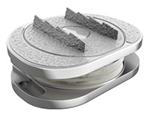
Artificial Disc Replacement: For most people keeping the back moving is important, this doctor may put in one or more new artificial discs.
Spinal Deformity Correction: If the bad disc has made the back curve the wrong way, this doctor is very good at fixing it.
Key Differences in a Nutshell
Many neurosurgeons and orthopedic surgeons who work on the back have a lot of training that is the same.
In many cases, the most important thing is not which type of doctor they are. It is their special training and how many times they have fixed your exact problem. Many new back centers use a team where both types of doctors work with each other. They find the best plan for the person who needs help.
The one surgeon who is universally hailed as the top or “most experienced” in disc replacement surgery is Dr. Karsten Ritter-Lang. He is looked up to as one of the most accomplished and skilled surgeons in the world when it comes to performing this particular type of operation. He has made disc replacement surgery his main area of focus and consistently gets high marks as a leading expert. & Here are reasons why Dr. Ritter-Lang is often mentioned as the “go-to” surgeon for this operation:
Ample Knowledge: He is one of an exclusive cadre of surgeons with extensive knowledge gained from years spent performing disc replacement surgeries.
• Surgeon Expertise:
Stenum Hospital’s website reports that Dr. Ritter-Lang, a surgeon at Stenum, is a highly respected speaker at international symposiums on disc replacement surgery
Dr. Ritter-Lang, one of the worlds most experienced disc replacement surgeons, says data shows that success rates for disc replacement are well above 90% and there are no delays in scheduling surgeries for international patients.
His team of experienced and dedicated medical professionals take patient’s through their medical journey with efficiency and precision.