Posterior vs Anterior Fusion, which is best?
Lumbar Fusion Surgery with Anterior approaches (ALIF, OLIF, XLIF) offer direct access to the disc space for thorough disc removal and allow the placement of larger cages, which can be advantageous for achieving lordosis (inward curve) restoration and indirect decompression to achieve vertebral spacing.
These fusion surgeries are often supplemented with posterior fixation, although devices like the ALIF TAS-Cage can reduce the need for posterior fixation.
ALIF TAS Cage Fusion Surgery
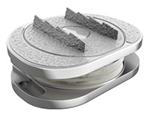
ALIF TAS-Cage refers to a specific type of interbody fusion cage used in Anterior Lumbar Interbody Fusion (ALIF) procedures. Specifically, it’s a titanium cage designed for ALIF, known as Endoskeleton TAS Interbody Fusion Device.
Often referred to as 360-Degree Lumbar Fusion, combined anterior and posterior approaches are considered superior or necessary for certain complex conditions, such as:
Severe spinal deformities (e.g., adult scoliosis, severe kyphosis) where significant correction of spinal alignment is needed.
High-grade spondylolisthesis (vertebral slippage) where robust anterior column support and reduction are critical.
Cases requiring very large interbody cages or extensive anterior spinal column reconstruction.
The landscape of lumbar fusion surgery has indeed evolved, with a move away from the “traditional” open 360-degree (anterior and posterior) fusion for many common conditions towards more targeted and often less invasive posterior approaches.
This shift has been driven by advancements in surgical techniques, instrumentation, and a better understanding of spinal biomechanics.
Understanding the Approaches:
360-Degree Fusion (Anterior and Posterior Lumbar Fusion):
This involves approaching the spine from both the front (anteriorly, usually through the abdomen) and the back (posteriorly, through the back). The goal is to achieve fusion of the vertebral bodies (interbody fusion) and the posterior elements (posterolateral fusion).
Posterior Lumbar Fusion (e.g., PLIF, TLIF, XLIF/OLIF):
These techniques primarily access the disc space and posterior elements from a posterior approach.
* PLIF (Posterior Lumbar Interbody Fusion): The disc is removed and replaced with a cage or bone graft from a direct posterior approach, along with posterior instrumentation.
* TLIF (Transforaminal Lumbar Interbody Fusion): A variation of PLIF that accesses the disc space through the foramen (nerve exit hole), often allowing for less retraction of the nerve roots. It’s often favored for its reduced morbidity compared to direct PLIF.
* XLIF (Extreme Lateral Interbody Fusion) / OLIF (Oblique Lumbar Interbody Fusion): These are minimally invasive lateral approaches that allow for placement of larger cages in the disc space, often used in conjunction with posterior stabilization.
Changes in Overall Success Rates and Considerations:
Fusion Rates:
360-degree fusion is associated with very high fusion rates (often cited as >95%) because it provides a robust construct with bone fusion across both the anterior and posterior columns.
Posterior-only interbody fusions (PLIF, TLIF), especially with the use of modern instrumentation (pedicle screws, interbody cages) and advanced bone grafts, also achieve fusion rates, often in the 80-90%+ range.
The key takeaway is that for appropriate indications, both approaches can achieve high fusion rates.
The superiority of 360-degree over instrumented posterior-only fusions in terms of fusion rate alone is often not statistically significant in contemporary studies for many common conditions.
Patient-Reported Outcomes (Pain and Function):
Studies comparing 360-degree fusion with modern posterior-only fusions (like TLIF) often show no significant difference in long-term patient-reported outcomes (e.g., pain relief, functional improvement, quality of life) for “appropriately selected patients”.
The “success” of spinal fusion is not just about bone fusion, but also about improving the patient’s symptoms and function. Both approaches, “when indicated”, can achieve significant improvements.
Morbidity and Recovery: This is where the shift has been most pronounced.
360-degree fusion is a more extensive surgery, requiring two incisions (anterior and posterior) and often a longer operative time. This historically led to:
* Higher blood loss.
* Longer hospital stays.
* More post-operative pain.
* Increased recovery time.
* Higher risk of certain complications related to the anterior approach (e.g., vascular injury, retrograde ejaculation in men, bowel complications).
Posterior-only fusions, especially minimally invasive variations (MIS-TLIF, MIS-PLIF), have significant advantages in these areas:
* Reduced tissue disruption: Smaller incisions, less muscle stripping.
* Less blood loss.
* Shorter hospital stays.
* Faster initial recovery and mobilization.
* Potentially less post-operative pain due to reduced soft tissue damage.
* Fewer anterior approach-related complications.
* Specific Indications and
Technological Advancements:
* The development of better interbody fusion cages, advanced bone graft materials, and sophisticated spinal instrumentation (pedicle screws, rods) has significantly improved the success of posterior-only fusions.
Minimally invasive techniques have allowed surgeons to achieve fusion with much smaller incisions, reducing the overall trauma to the patient.
Navigation systems and robotic assistance are further enhancing the precision and safety of posterior approaches.
Conclusion:
The shift has not necessarily been about one approach having a vastly higher overall success rate in terms of achieving bone fusion or symptomatic relief for all conditions. Instead, it’s been about:
Optimizing outcomes for common conditions: For many degenerative conditions, modern posterior-only fusions (especially TLIF and its minimally invasive variants) offer comparable long-term success rates to 360-degree fusion but with significantly less surgical morbidity, faster recovery, and lower complication risks.
Tailoring the approach to the patient and pathology: Surgeons now have a broader array of sophisticated techniques. The choice of 360-degree vs. posterior-only (or even anterior-only with posterior instrumentation) is dictated by the specific spinal pathology, the need for deformity correction, the patient’s overall health, and the surgeon’s expertise.
Minimally invasive principles: The trend is strongly towards less invasive approaches whenever possible, which has greatly benefited patients in terms of recovery and overall experience, without compromising long-term outcomes for patients with appropriate indications.
It is important that your surgeon has experience with 360 Degree Fusion as well as Posterior Fusion surgery in order to be certain that both options have been considered.
Dr. Karsten Ritter-Lang founder and creator of Stenum Hospital’s Artificial Disc Replacement program is an international go-to Spinal Surgeon , with experience in 360 Degree Fusion, Posterior Fusion, Hybrid Fusion Disc Replacement and Artificial Disc Replacement surgery.
With experience treating as many as 10,000 spine patients and placing over 8000 Disc Replacement implants his expertise is essential in determining the best treatment option for each individual.
His 30-year track record has seen many patients travel the globe to seek out his experience and sophisticated professional care.
As a leading innovator in motion preservation of the spine, an educator and contributor, Dr. Karsten Ritter-Lang has published multiple peer-reviewed articles and book chapters on topics relating to spinal conditions and treatments. He has presented a myriad of papers at national and regional medical society meetings, and he is often sought out as the principal investigator for various clinical trials on motion preserving surgeries.
Dr. Karsten Ritter-Lang remains at the forefront of technological advancement, particularly in the development of artificial disc replacement devices, most recently the M6 Disc Replacement and Motion Preservation Surgery.
Dr. Karsten Ritter-Lang lives and believes in his approach to holistic health, and seeks to help patients rethink their own future.
Dr. Karsten Ritter-Lang takes a holistic approach, ensuring one’s age, daily lifestyle, nutrition, hormone status, physical exercise routine, and of course spine and joint health are considered, to present a more comprehensive picture of one’s health from a multi dimensional perspective.
Dr. Karsten Ritter-Lang’s innovative philosophy goes well beyond the standard medical approach to incorporate all facets of one’s daily livelihood to map out an entire preventative and forward-thinking approach to post surgical management to ensure all of his patients live an active, healthy and pain-free life.
“Advanced disc replacement solutions have allowed us to achieve a success rate of 99%”
Dr. Karsten-Ritter-Lang Disc Replacement Surgeon
“After years of suffering, I avoided spinal fusion surgery, had Disc Replacement Surgery, went to Dr. Ritter-Lang and had a wonderful result.”
“Dr. Ritter-Lang gave me a solution that I was not being offered by my doctors in the US”