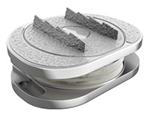
Artificial Disc Replacement offers a significantly shorter path to functional recovery because it relies on immediate mechanical stability and motion preservation rather than waiting for biological bone fusion.
When conservative treatments fail to relieve severe discogenic back or neck pain, patients face a pivotal surgical decision: Artificial Disc Replacement (ADR)—also known as Total Disc Replacement (TDR)—or traditional Spinal Fusion.
While both procedures aim to decompress nerves and eliminate painful disc pathology, their post-operative recovery trajectories differ substantially. Understanding the timeline, physiological milestones, and functional expectations for each procedure provides clarity on what the healing journey actually looks like.
The Core Difference: Motion Preservation vs. Bony Fusion
The disparity in recovery times stems directly from the underlying biological goal of each procedure:
Artificial Disc Replacement (ADR): The damaged natural disc is removed and replaced with a mechanical device engineered to preserve physiological motion. Recovery centers on soft tissue healing, implant integration (bone ingrowth/on-growth), and neuromuscular rehabilitation.
Spinal Fusion (ACDF, ALIF, TLIF, PLIF): The disc is removed, bone graft material is inserted, and hardware (plates, rods, screws) is installed to permanently immobilize the segment. Recovery depends entirely on bony arthrodesis—the biological process of two separate vertebrae growing together into one solid bone.
Phase 1: Weeks 1 to 4 (Immediate Post-Op & Early Mobilization)
Artificial Disc Replacement:
Because the mechanical device is immediately stable once positioned and anchored, patients are encouraged to walk within hours of waking from anesthesia. Early mobility prevents scar tissue adhesion and maintains hip and core muscle activation. Pain is largely related to the surgical approach (e.g., anterior abdominal or retroperitoneal muscle soreness for lumbar ADR, or mild throat soreness for cervical ADR). Most patients taper off strong narcotics within 7 to 14 days.
Spinal Fusion:
While patients also walk early to prevent blood clots, early spine movement must be restricted to prevent micro-motion at the graft site, which can cause non-union (pseudarthrosis). Patients often wear rigid orthotic braces. Muscle spasm management and pain control typically require a longer course of medication.
Phase 2: Weeks 4 to 12 (Rehabilitation & Functional Strength)
Artificial Disc Replacement:
Formal physical therapy begins early (usually weeks 3–4). The focus is on segmental mobility, pelvic stabilization, core engagement, and posture retraining. Because adjacent segments are not forced to compensate for a rigid fused block, normal movement mechanics return faster. Many sedentary professionals return to desk work between weeks 3 and 6.
Spinal Fusion:
This is a critical “waiting” phase. Physical therapy is often delayed or strictly limited to gentle isometric movements until follow-up flexion/extension X-rays or CT scans confirm that bone bridging has begun. Bending, lifting, and twisting (BLT restrictions) remain tightly enforced.
Phase 3: Months 3 to 6 (Tissue Maturation vs. Bone Consolidation)
Artificial Disc Replacement:
By month 3, titanium coating or porous surfaces on the endplates have achieved solid biological bone ingrowth. Patients typically transition to higher-impact conditioning, resistance training, and recreational sports (running, swimming, cycling, golf) with surgical clearance.
Spinal Fusion:
Dynamic bone remodeling continues. If imaging demonstrates adequate bridging trabecular bone, the surgeon will gradually lift activity restrictions and initiate active strengthening. However, full structural strength is still several months away.
Phase 4: Months 6 to 12+ (Long-Term Outcomes & Adjacent Segment Health)
Artificial Disc Replacement:
Most patients achieve full baseline recovery by 6 months. Long-term studies consistently show that preserving kinematics at the operative level significantly reduces hyper-mobility, shear stress, and premature breakdown at the discs above and below (Adjacent Segment Disease).
Spinal Fusion:
Full solid fusion typically takes 9 to 12 months (longer in multi-level procedures or patients with compromised bone density). While fusion provides durable pain relief for many, adjacent segments permanently absorb increased biomechanical load, requiring ongoing long-term vigilance.
Variables That Impact Your Actual Recovery Timeline
Cervical vs. Lumbar: Cervical ADR recovery is generally faster than lumbar ADR. Neck tissues heal rapidly, and the cervical spine carries far less mechanical load than the lumbosacral junction (L4-S1).
Single-Level vs. Multi-Level: Treating 2 or 3 disc levels increases operative time, soft tissue dissection, and initial rehabilitation duration.
Surgical Approach & Tissue Handling: Modern anterior retroperitoneal approaches spare lumbar posterior muscles, enabling faster functional recovery compared to traditional posterior midline fusion with muscle stripping.
Patient Compliance: Adhering strictly to early lifting limits and committing to progressive, structured rehabilitation dictates the final outcome regardless of the hardware used.
Key Takeaway
Artificial Disc Replacement offers a significantly shorter, more dynamic path to functional recovery because it relies on immediate mechanical stability and motion preservation rather than waiting for biological bone fusion. While spinal fusion remains an essential and effective solution for patients with severe deformity, facet joint arthrosis, or spinal instability, ADR allows suitable candidates to regain mobility, return to work, and resume active lifestyles on an accelerated timeline.
destination.
Disc replacement surgery provides a less invasive alternative to spinal fusion surgery and protects against adjacent level degeneration.
“Advanced disc replacement solutions have allowed us to achieve a success rate of 99%”
Dr. Karsten-Ritter-Lang Disc Replacement Surgeon
“After years of suffering, I avoided spinal fusion surgery, had Disc Replacement Surgery, went to Dr. Ritter-Lang and had a wonderful result.”
“Dr. Ritter-Lang gave me a solution that I was not being offered by my doctors in the US”