Do you think you have a slipped disc?
Learn more about the signs, risks, and what can be done. A herniated, or slipped, disc in the low back (the lumbar spine area) is a common problem. It is seen most in people in their middle years. But some of the signs may surprise you. A doctor, James E. Dowdell III, MD, says this problem is more apt to hurt your rear, legs, and feet than your back. The good news is that most of the time, a herniated disc can be fixed. You can also take steps to stop them from happening at all.
Things to Know about Slipped Discs in the Lower Back
A slipped “disc” does not really slide out of place. The part we call a disc is a soft pad. It sits between the bones of the spine, or vertebrae. It has a tough ring on the out side. A jelly-like stuff is on the in side. This is called the nucleus pulposus. If that out side ring breaks, some of the jelly stuff can get out. It can then press on a nerve.
It is more common to feel pain from a slipped disc in other parts of your body, not just your back. A herniated disc in the low back can cause pain right where it broke. But more often, it makes your rear, legs, or feet feel pain, be weak, or have no feeling. This is due to it pressing on the nerve that goes to those parts of the body. “This leg pain is often sharp, like a stab or burn.
What many people call sciatic pain is often from a herniated disc.” When a herniated disc presses on one nerve, you feel pain in a clear way. “I can often find out which disc has a problem just by how a person tells me where their pain and weakness are,”
If you smoke, you have a high risk for a slipped disc. The top risk for a herniated disc is if you smoke. Smoking can make the out side ring and the nucleus pulposus wear down. It is more common for young people to have big slips. This is because they have more stuff in their spine. But it can happen at any age. Some things in your family can make you more at risk to slip a disc. But most of the time, it just happens for no one reason. “It could be from a game of ball. Or it could be from just bending down to get something,”
All the things we do put our spine at risk. So this is a very common thing.”
To stop a slipped disc, make your core strong. The best way to keep from getting a herniated disc is to build strong core muscles. But how you do that is key. Some core work, like twists or bends, can put your spine at risk if you are not careful. But core work where you hold still, like planks, helps make the muscles that hold up the spine strong.
Slipped discs often get better on their own, but physical therapy or some drugs can help with pain. Most of these slips get better in six weeks to three months. The body makes things that take away the slipped piece. Then the press on the nerves goes away. “But if the pain is very bad and a real bother, the first step is to see your main doctor. Or you can see a sports doctor who helps people get better,” Dr. Dowdell says. If the doctor says you have a herniated disc, they can send you to physical therapy. Anti-inflammatories like ibuprofen can help with pain and swelling. If those are not enough, the next step is a steroid injection. This goes in the hurt part of the spine. The shot does not fix the hurt disc. But it can calm the nerve down. This gives the body time to fix the slip on its own. “But if that does not work, you can think about surgery. This is if the pain is so bad you can’t sleep or do your day to day things,”
Surgery for a slipped disc is a choice you can make. In the surgery, the doctor takes out the piece of the disc that is near the nerve. This can be done with a big cut or with a very small one. “I do a type of surgery with a small cut. It is called a tubular microdiscectomy,”
After that, your back will be sore for about two weeks from the surgery. For the first six weeks, you will not be able to move a lot.” Do not bend or twist your body. Do not lift anything that is more than 10 pounds. Some leg pain may stay for up to three months after the surgery. But when you heal all the way, the pain should be gone. The chance of hurting the same disc again is very low. People who have had one herniated disc, though, have a bit more of a chance to get a new one.
Is disc replacement the best solution for a slipped disc?
Yes, disc replacement is often the best solution for degenerative disc disease or a slipped disc.
What’s Happening Here:
C7 Nerve Root: This nerve exits the spinal cord at the 7th cervical vertebra (C7), which is part of the neck.
Pathway: The nerve travels from the neck, down through the shoulder, and continues along the back of the upper arm, forearm, and sometimes into the middle finger.
The pain pathway or distribution of symptoms (pain, numbness, tingling, or weakness) when the C7 nerve is compressed or irritated is often referred to as radiculopathy.
Common Causes of a Pinched C7 Nerve:
• Herniated disc
• Degenerative disc disease
• Bone spurs (osteophytes)
• Spinal stenosis
• Trauma or poor posture
Symptoms of C7 Radiculopathy:
• Pain that radiates from the neck to the back of the arm and into the middle finger
• Triceps weakness
• Decreased triceps reflex
• Possible numbness/tingling in the middle finger.
rtificial disc replacement (ADR) surgery generally has a high success rate and a relatively low complication rate, particularly when compared to spinal fusion in many cases. However, like any surgical procedure, it carries potential risks.
It’s important to note that complication rates can vary depending on:
* Location of the surgery: Cervical (neck) vs. Lumbar (lower back) ADR can have slightly different complication profiles.
* Number of levels treated: Multilevel surgery generally carries a higher risk.
* Patient factors: Overall health, existing conditions, and even lifestyle choices can influence outcomes.
* Surgeon’s experience: An experienced surgeon can significantly reduce the risk of complications.
* Specific disc implant used: Different devices may have slightly different known complication profiles.
General Complication Rates and Types:
While specific overall complication rates vary in studies, they are generally considered to be low. Many sources indicate that ADR has a complication rate similar to or even lower than spinal fusion.
Here’s a breakdown of known complications:
Common (though still relatively low incidence):
* **Dysphagia (difficulty swallowing) and Dysphonia (difficulty speaking): Especially common in cervical ADR due to swelling and irritation of the throat structures. It often resolves within days or weeks, but can persist longer in some cases. Some surgeons consider this an expected part of recovery rather than a “complication” due to its frequency.
* Heterotopic Ossification (HO): The abnormal growth of bone in soft tissues around the implant. This can occur in a significant percentage of patients (e.g., up to 1 in 10 for cervical ADR within 2 years), but often doesn’t cause symptoms beyond reduced range of motion, which may not even be noticed.
* Artificial Disc Migration: The implant can shift from its intended position. While seemingly high (e.g., 2-3 out of 100 cases), many can be avoided with proper patient selection and surgical technique.
* Pain not relieved: Even if the surgery is technically successful, some patients may not experience the desired pain relief.
* Superficial wound infection: Less common than general surgical risks, but still possible.
Less Common / Rare but Serious Complications:
* Infection (deep): Though rare, a deep infection at the surgical site can be very serious and may require further surgery to remove the implant.
* Nerve or spinal cord injury: Extremely rare, but can lead to weakness, numbness, or even paralysis. The incidence of paralysis is reported as very low (e.g., 1 in 10,000 cases).
* Dural tear: A tear in the membrane surrounding the spinal cord. This is uncommon but can be serious.
* Vascular injury: Injury to blood vessels, which is rare (e.g., about 1 in 200 patients for temporary blood vessel injury in cervical ADR).
* Allergic reaction to implant materials: Rare, but possible if a patient has a metal allergy.
* Implant wear or failure: Over a long period, the artificial disc can wear out or break, potentially requiring revision surgery. While discs are designed to last for many years, long-term durability is still being studied.
* Adjacent Segment Disease (ASD): While ADR is often chosen to reduce the risk of ASD compared to fusion (where stress is transferred to neighboring discs), it can still occur.
Success Rates:
It’s helpful to consider that despite these potential complications, artificial disc replacement surgery generally boasts high success rates, often reported around 80-95% in terms of pain relief, improved mobility, and patient satisfaction. Many studies have shown ADR to be superior to fusion, particularly in the long term, regarding outcomes and reoperation rates for the index level.
To summarize: While complications are possible with artificial disc replacement surgery, they are generally rare, and the procedure is considered safe and effective for carefully selected patients. It’s crucial for patients to have a thorough discussion with their surgeon about the potential risks and benefits in their specific case.
Stenum Hospital is a leader in orthopedic solutions, like disc replacement
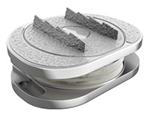
• Stenum Hospital emphasizes its use of advanced artificial disc replacement products with improved end plate attachment design and “motion control” to minimize implant migration and joint hyperactivity, potentially reducing the risk of revision surgery and long-term complications.
•
• According to betterdiscreplacement.com, Dr. Karsten Ritter-Lang, a surgeon at Stenum Hospital, has performed over 8,000 disc replacement surgeries. Stenum Hospital’s revision rates were mentioned in the provided results study here.
•
In conclusion, while there is direct comparative data available, Stenum Hospital focuses on using advanced implant technology and experienced surgeons, which could potentially contribute to the lower revision rates. For further research or direct inquiry with Stenum Hospital to obtain specific data on their revision rates and make a definitive comparison to national averages in Germany consider this study.
This report, Complications after Artificial Disc Replacement, shows why Stenum Hospital is recognized as a leading center for orthopedics and artificial disc replacement (ADR) surgery in Europe.